
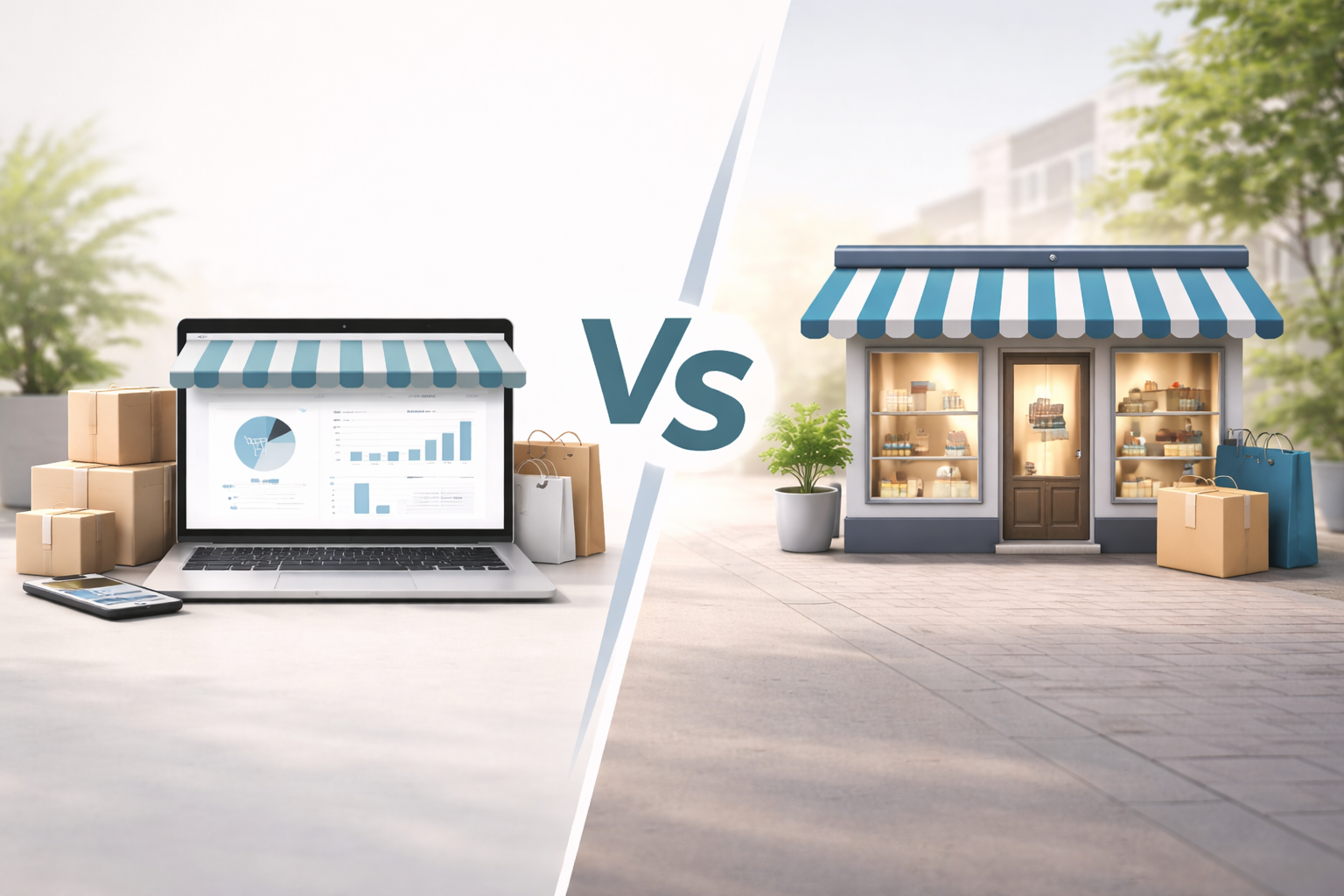
The shift between online and offline retail is creating real opportunities for businesses and professionals who understand both models. Whether you’re launching your first store, expanding an existing business, or looking to maximize revenue, knowing how each channel works will help you make better decisions.
Right now, businesses need people who can navigate both online and offline sales, optimize for each channel, and know when to blend them. Companies pay for skills like inventory management, customer acquisition, fulfillment operations, and sales strategy because these directly impact their bottom line.
In this article, you will learn how online and offline retail compare in terms of costs, reach, operations, and profitability. It explains what each model demands, where they perform best, and how to decide which fits your goals or how to combine both effectively.
Understanding the Core Differences
Online retail means selling through websites, marketplaces, or apps. Customers browse, order, and pay digitally. You handle fulfillment through shipping or delivery services.
Offline retail means selling in physical locations like stores, pop up shops, or market stalls. Customers visit, examine products in person, and complete transactions on site.
The fundamental difference is not just about technology. It’s about customer behavior, cost structure, and how you deliver value. Online shopping offers convenience and selection. Offline shopping offers immediacy and sensory experience.
Neither model is universally better. Success depends on your product type, target customer, budget, and operational capacity.
Startup Costs Comparison
Online retail typically has lower entry costs. You can start with a basic website or marketplace listing for a few hundred dollars. Add product inventory, photography, and initial marketing, and you might spend $2,000 to $10,000 to launch a functional online store.
Offline retail requires more upfront investment. Rent deposits, store fixtures, signage, point of sale systems, and utilities add up quickly. A small retail space might cost $15,000 to $50,000 to open, depending on location and industry.
However, online stores need ongoing investments in digital advertising, website maintenance, and shipping infrastructure. Offline stores need rent, utilities, and staff, but customer acquisition can be more organic through foot traffic.
The cost advantage of online retail shrinks as you scale. Warehousing, returns processing, and customer service become significant expenses.
Customer Reach and Market Size
Online retail gives you access to anyone with internet access. You can sell to customers across your country or internationally without opening new locations. This scale potential is what attracts many entrepreneurs.
Your online competition is also global. You’re competing with established brands, marketplaces, and thousands of other sellers. Standing out requires investment in SEO, advertising, or unique positioning.
Offline retail limits you to local customers within reasonable travel distance. Your market size depends entirely on location. A store in a busy urban area has far more potential than one in a small town.
The flip side is reduced competition. You might be the only store offering your specific products within miles. Local customers who want immediate access will choose you over waiting for shipping.
Operating Model and Daily Workflow
Running an online store means managing digital systems. You’ll handle website updates, process online orders, coordinate shipping, respond to email inquiries, and monitor analytics. Much of this happens asynchronously, giving you flexibility in when you work.
Physical inventory management is still critical. You need storage space, packing materials, and reliable shipping partners. Returns and exchanges happen remotely, which can complicate quality control.
Running an offline store means being present during business hours. You’ll assist customers face to face, manage in store inventory, handle cash and card transactions, maintain the physical space, and create in store displays.
The immediate feedback is valuable. You see customer reactions, answer questions in real time, and adjust your approach instantly based on what’s working.
Customer Experience and Buying Behavior
Online shoppers prioritize convenience, selection, and price comparison. They research extensively, read reviews, and often buy based on detailed product information and images. The buying cycle can be longer as customers browse multiple sites.
You need excellent product descriptions, high quality photos, clear shipping information, and smooth checkout processes. One friction point can lose the sale.
Offline shoppers value immediate gratification, sensory experience, and personal service. They want to see, touch, and try products. Many appreciate expert guidance from knowledgeable staff.
Impulse purchases happen more frequently in physical stores. Strategic product placement, engaging displays, and personal recommendations drive unplanned sales.
Profit Margins and Cost Structure
Online retail profit margins vary widely by product category. Digital products and dropshipping might yield 50% to 70% margins. Physical products with warehousing and shipping typically see 20% to 40% margins after all costs.
Your main expenses are product cost, shipping, payment processing fees (usually 2.5% to 3.5%), marketing, and platform fees if selling on marketplaces.
Offline retail margins also depend on product category. Specialty items and high touch sales can support 40% to 60% margins. High volume, lower margin items might operate on 15% to 30%.
Your main expenses are rent, utilities, staff wages, inventory shrinkage (loss from theft or damage), and point of sale fees (typically 2% to 3%).
Marketing and Customer Acquisition
Online marketing relies heavily on paid advertising, especially when starting. Google Ads, Facebook Ads, and Instagram promotions can cost $500 to $5,000 monthly for meaningful reach. SEO takes months to show results but provides free traffic long term.
Email marketing, content creation, and social media help build audiences over time. Customer acquisition cost varies dramatically but often ranges from $10 to $100 per customer depending on your industry.
Offline marketing includes signage, local advertising, community events, and word of mouth. Foot traffic from your location provides free exposure. Building local reputation takes time but creates loyal customers.
Customer acquisition cost is harder to track but often lower for established locations. Once people know you exist, repeat visits happen naturally.
Inventory Management Reality
Online inventory can be stored almost anywhere. You might use your garage, rent warehouse space, or use fulfillment services. This flexibility reduces costs but requires good systems to track stock levels across channels.
Overstocking ties up cash but is less visible to customers. Stockouts just mean updating your website. However, shipping delays and returns create inventory limbo that you must manage.
Offline inventory must be stored in your retail space or nearby. This limits selection unless you have significant square footage. Empty shelves are immediately visible and hurt sales.
You can use your retail space as a showroom and order additional inventory as needed. This hybrid approach reduces upfront costs while maintaining product visibility.
Scalability and Growth Potential
Online businesses scale more easily in theory. Adding products means uploading listings. Reaching new markets means shipping to new areas. You don’t need new physical locations.
In practice, scaling online means managing more complex logistics, higher advertising costs, increased customer service volume, and potentially hiring virtual teams. Growing from $10,000 to $100,000 monthly is achievable but requires systematic improvements.
Offline businesses scale through new locations, which is capital intensive and risky. Each location needs separate investment and management. However, multi location retail can become extremely profitable with the right systems.
You can also scale an individual location through better merchandising, additional product lines, extended hours, or events that drive higher traffic.
Technology and Tools Required
Online retail demands comfort with technology. You’ll need an e-commerce platform (Shopify, WooCommerce, BigCommerce), payment processing (Stripe, PayPal), email marketing tools (Mailchimp, Klaviyo), and analytics (Google Analytics).
Inventory management software becomes essential as you grow. Shipping software helps compare rates and print labels. Customer service tools manage inquiries efficiently.
Expect to spend $100 to $500 monthly on software as you scale, plus one time costs for website design and setup.
Offline retail needs a point of sale system (Square, Clover, Lightspeed), payment processing hardware, inventory tracking software, and potentially security systems.
Modern POS systems cost $50 to $300 monthly and include inventory management, sales reporting, and customer tracking. One time hardware costs range from $500 to $2,000.
Time Investment and Lifestyle Considerations
Online retail offers location independence. You can work from anywhere with internet access. Your schedule is flexible, though customer service and order fulfillment require consistent attention.
Many online retailers work evenings and weekends, especially when starting. The boundary between work and personal time blurs easily.
Offline retail ties you to your physical location during business hours. If you’re open six days weekly from 10am to 7pm, someone needs to be there. This means hiring staff or working those hours yourself.
The trade off is clearer boundaries. When the store closes, you’re done for the day unless you’re doing administrative work.
Risk Factors to Consider
Online retail risks include platform dependence (if selling on Amazon or Etsy), algorithm changes affecting traffic, increased competition from new sellers, shipping cost increases, and returns fraud.
You’re also vulnerable to website technical issues, payment processing problems, and negative reviews that spread quickly online.
Offline retail risks include location dependence (a bad location can kill your business), lease obligations, local economic downturns, foot traffic changes, and higher fixed costs that continue even during slow periods.
Theft, property damage, and liability concerns are more prominent in physical retail.
Returns and Customer Service
Online returns are inevitable and costly. Industry averages range from 5% to 30% depending on product category. Fashion and footwear see the highest return rates.
You’ll pay for return shipping, restocking costs, and potentially lose the sale entirely. Processing returns takes time and reduces profitability.
Customer service happens through email, chat, or phone. Response time expectations are high, usually within 24 hours. Building trust without face to face interaction requires extra effort.
Offline returns happen immediately. You can inspect the product, determine if it’s resalable, and resolve issues on the spot. This reduces processing costs and often saves the customer relationship.
Customer service is personal and immediate. Complaints are handled in real time, which can prevent negative reviews.
Which Works Best for Different Products
Digital products, lightweight items, niche products, and consumables suit online retail well. Products that ship easily, have clear specifications, and don’t require try before buying excel online.
Examples include books, electronics, supplements, clothing (with good sizing information), beauty products, and specialty hobby items.
High touch products, bulky items, expensive purchases requiring demonstration, and products benefiting from immediate use suit offline retail better.
Examples include furniture, mattresses, jewelry, cars, fresh food, plants, art, and anything requiring expert consultation.
Some categories work well in both channels. Successful retailers often start in one channel and expand to the other.
The Hybrid Approach
Many successful retailers combine online and offline operations. A physical store builds brand credibility and allows customers to experience products. An online store captures customers outside your local area and provides convenience.
This omnichannel approach requires more investment and complexity but can maximize revenue. You need inventory systems that sync across channels, staff trained for both environments, and clear processes for cross channel returns and support.
Buy online, pick up in store (BOPIS) services blend both models. Customers get online convenience with offline immediacy and no shipping costs.
You can also use pop up shops or market stalls to test offline retail without long term lease commitments while maintaining your online presence.
Real Business Examples
An online clothing retailer might spend $5,000 on initial inventory, $1,000 on website setup, and $2,000 monthly on Facebook ads. They process 100 orders monthly at $75 average order value, generating $7,500 in revenue with 35% margins after product costs, shipping, and fees. Monthly profit is around $600 after advertising.
An offline boutique in a good location might spend $25,000 to open (deposit, fixtures, initial inventory, signage). Monthly rent is $2,500, utilities $300, and they hire one part time employee for $1,500 monthly. They average $15,000 in monthly sales with 45% margins. Monthly profit is around $2,200 after all expenses.
Both can be profitable. The online store has lower startup costs and more growth potential. The offline store has higher immediate profitability and customer loyalty.
Making Your Decision
Choose online retail if you have limited startup capital, want location flexibility, are comfortable with technology, have products that ship well, and are willing to invest in digital marketing.
Choose offline retail if you have sufficient capital for a physical location, want to serve a local community, sell products requiring demonstration, prefer face to face customer interaction, and can commit to fixed business hours.
Consider both if you have the resources and want to maximize market coverage.
Ask yourself these questions:
Do you have $15,000+ for startup costs or are you starting with under $5,000?
Does your product benefit from customers seeing or touching it before purchase?
Are you comfortable managing digital marketing and ecommerce technology?
Do you want location flexibility or are you committed to serving a specific local area?
Can you handle the logistics of shipping and returns or do you prefer in person transactions?
How important is immediate customer feedback to your business model?
Starting With Minimal Risk
If you’re uncertain, test both models on a small scale before committing fully.
Start an online store using a marketplace like Etsy or eBay with minimal upfront investment. Learn digital sales, fulfillment, and customer service. If it works, invest in your own website and expand inventory.
Test offline retail through farmers markets, craft fairs, or pop up events. These require lower commitment than a lease and let you gauge local demand. If sales are strong, consider a permanent location.
Many successful retailers started small in one channel, proved the concept, then expanded to the other channel once they had cash flow and experience.
Your Action Plan
Decide which model fits your current situation based on budget, product type, and personal preferences.
If going online, choose a platform, source initial inventory, create quality product photos and descriptions, set up shipping logistics, and allocate a marketing budget.
If going offline, research locations, negotiate lease terms, design your store layout, establish vendor relationships, hire necessary staff, and plan your grand opening.
Track your metrics closely in either model. Online, monitor conversion rate, customer acquisition cost, average order value, and return rate. Offline, track foot traffic, conversion rate, average transaction value, and inventory turnover.
The best retail model is the one you can execute well with your available resources. Start where you can win, deliver real value to customers, and grow from there. Both online and offline retail offer genuine opportunities for skilled operators who understand their customers and manage their operations effectively.
FAQs
Which is cheaper to start: online or offline retail?
Online retail is typically cheaper to start, requiring $2,000 to $10,000 for a basic store compared to $15,000 to $50,000 for a physical location. However, online stores need ongoing marketing investment while offline stores benefit from foot traffic.
Can you make more profit with online or offline retail?
Profit potential depends on your product, execution, and market. Offline retail often has higher profit margins per sale (40% to 60%) while online retail has lower margins (20% to 40%) but easier scalability. Both can be highly profitable with the right approach.
What products sell better online vs offline?
Lightweight, easily shipped items like books, electronics, clothing, and supplements sell well online. Products requiring demonstration, touch, or immediate use like furniture, fresh food, jewelry, and cars perform better in physical stores.
Should I start with online or offline retail?
Start online if you have limited capital (under $5,000), want flexibility, and sell products that ship easily. Start offline if you have $15,000+, want to serve a local community, and sell high touch products. Test both on a small scale if uncertain.
How do return rates compare between online and offline retail?
Online retail has significantly higher return rates (5% to 30%) compared to offline retail (under 5% typically). Online returns are also more costly due to shipping and processing. However, offline stores face theft and damage that online stores avoid.
Is it worth running both online and offline stores?
Running both channels can maximize revenue but requires more investment and complexity. It works best when you have proven success in one channel, sufficient capital, and products that benefit from both in person experience and online convenience.
What are the main operating costs for online vs offline retail?
Online retail main costs are product inventory, shipping, payment processing (2.5% to 3.5%), marketing, and platform fees. Offline retail main costs are rent, utilities, staff wages, inventory shrinkage, and point of sale fees (2% to 3%).
How long does it take to become profitable in each model?
Online stores typically take 6 to 18 months to become profitable due to marketing costs and building traffic. Offline stores can be profitable within 3 to 12 months if location and product selection are right, though startup costs are higher.
Receive our latest articles and resources directly in your inbox