
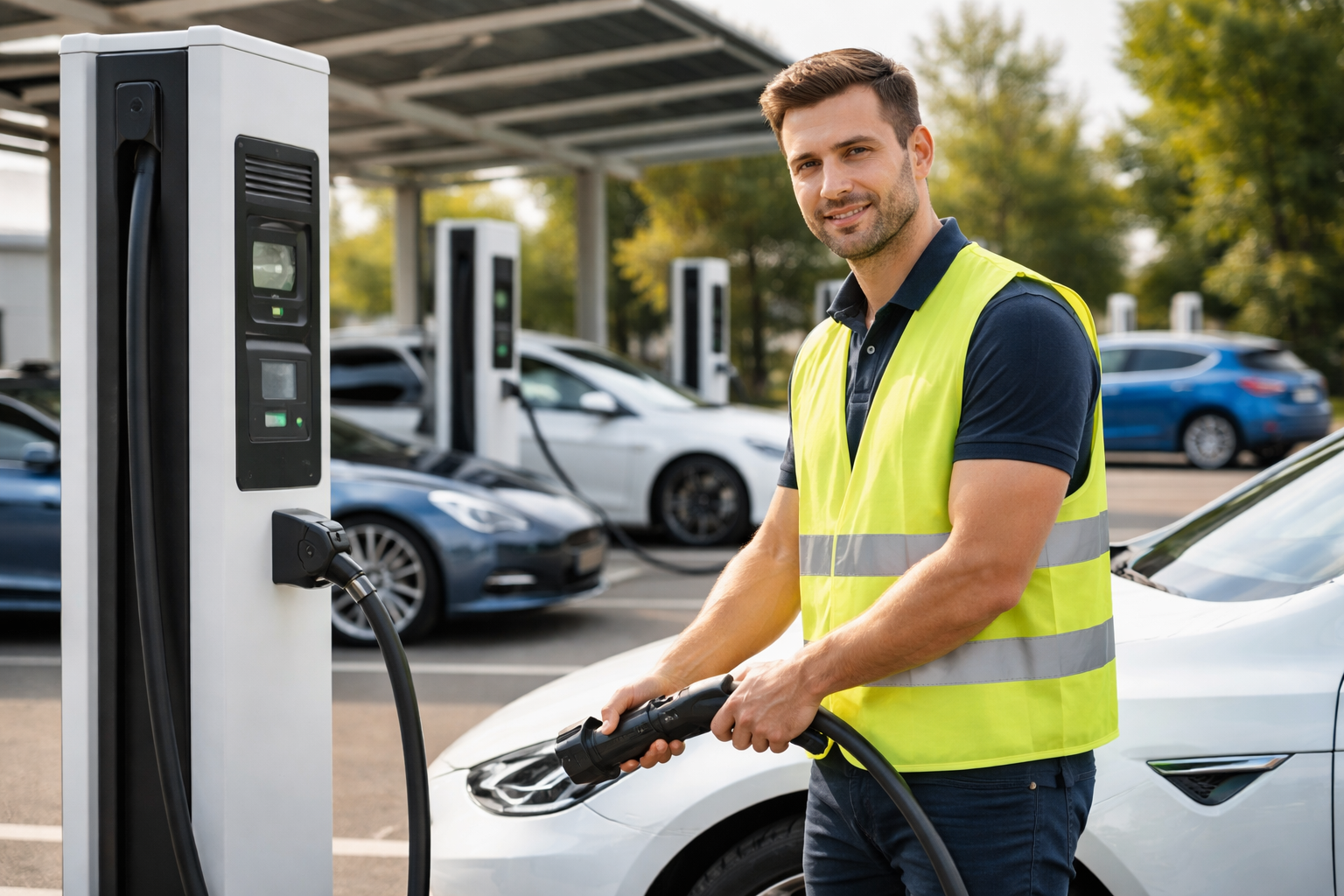
Electric vehicles are becoming more common, but charging infrastructure is still limited in many areas. That imbalance creates a strong opportunity for entrepreneurs who want to build and operate EV charging stations for public and private use.
If you want a business that aligns with future transportation trends, this is a practical and scalable option. It requires planning, location research, and technical setup, but once established, it can generate steady recurring income.
This guide will help you understand the full process of starting an EV charging station business, including setup decisions, approvals, equipment, and operations.
Step 1: Evaluate demand for EV charging in your city
This step helps you avoid investing in locations where charging is not needed yet. Many beginners choose a site based on rent or availability rather than real EV traffic.
By identifying where electric vehicles are already operating, you can ensure your charging station attracts consistent users.
Map high usage vehicle areas
Look for places where EV owners naturally park for longer durations. Apartments, offices, malls, and highway stops are common early demand zones.
- Visit these areas and observe how many EVs are already using the parking space.
- Speak with property owners to understand if they are planning charging installations.
Estimate future growth potential
EV demand will grow, but some areas expand faster than others.
- Choose locations near new residential or commercial developments to capture long term demand.
- Avoid sites with poor access or limited parking, as they reduce customer convenience.
Step 2: Decide the type of charging station you want to operate
Not all EV charging stations are the same. Your business model will depend on whether you want to serve homes, commercial properties, or public charging users.
This decision affects your equipment costs and operational scale.
Residential charging stations
These are installed inside apartments or gated communities for private EV owners.
- Offer slower but affordable chargers that match residential electrical capacity.
- Charge customers either per unit consumed or through monthly subscription plans.
Commercial and public charging stations
These stations serve offices, malls, restaurants, and highway locations where EV users need faster charging.
- Install higher capacity chargers that support multiple vehicles simultaneously.
- Consider adding waiting amenities like seating or refreshment areas to improve user experience.
Step 3: Understand the legal and regulatory requirements
Because this is an infrastructure and safety based business, you must follow proper approvals before launching. Skipping compliance can stop operations or create penalties later.
This step prepares you to operate professionally and legally.
Business and trade registration
Register your entity before purchasing and installing equipment.
- Obtain your local trade license to run an electrical service or energy related business.
- Open a business bank account so transactions remain transparent.
Electrical and municipal approvals
You will be working with high power systems, so regulations apply.
- Coordinate with your city’s electricity board for load approval and transformer support if required.
- Follow national safety guidelines to ensure installations meet technical standards.
Step 4: Select a strategic location for your charging station
Location determines profitability in this business. Choosing an area without traffic or visibility is one of the most common mistakes new operators make.
A strong location ensures your station gets repeat usage.
Urban charging locations
These work well near offices, apartments, and shopping complexes where EV owners park regularly.
- Choose sites that are easily accessible and safe for vehicles.
- Ensure the location has enough electrical load and parking space for future expansion.
Highway and transit locations
These serve long distance EV users who need quick charging during travel.
- Partner with petrol pumps or roadside restaurants to share space and increase visibility.
- Install fast charging equipment since highway users need quicker turnaround time.
Step 5: Invest in the right charging equipment and infrastructure
The quality and type of chargers you install will affect your reputation and station performance. It is better to start with fewer reliable chargers than many low quality ones.
This step focuses on proper technical setup.
Choose charger types and capacities
Different chargers support different charging speeds and power needs.
- Install AC chargers for basic charging and DC fast chargers for high demand commercial use.
- Ensure all chargers are certified and compatible with popular EV models.
Set up electrical and safety systems
Your station must operate safely and consistently.
- Install proper wiring, earthing, and load protection systems to prevent electrical issues.
- Keep backup systems or stabilizers to maintain uninterrupted charging performance.
Step 6: Create your revenue and pricing model
Your earnings depend on how you charge users. Having a clear pricing structure helps customers trust your service and return regularly.
This step converts infrastructure into income.
Pay per use charging
This is the most common and beginner friendly model.
- Customers pay based on electricity consumed during each charging session.
- Display clear pricing and usage rates so there is no confusion.
Subscription and fleet charging
This works well for delivery companies or EV taxi operators.
- Offer discounted monthly plans for bulk users to ensure recurring revenue.
- Provide maintenance and uptime guarantees to attract large clients.
Step 7: Promote your charging station and build visibility
Even if your station is set up well, customers will not come unless they know it exists. Marketing is essential in the early stages.
This step ensures your business becomes visible in your local EV ecosystem.
Register your station on EV charging apps
Most EV drivers rely on maps and apps to locate chargers.
- List your charging station on major EV charging directories so users can easily find you.
- Keep location details, pricing, and availability updated.
Build partnerships with EV dealers and property owners
They can send customers directly to your station.
- Offer referral incentives for EV showrooms who direct buyers to your charging station.
- Collaborate with apartment associations or office managers to provide exclusive charging access.
Legal and Money Considerations as You Grow
As your station scales, you may need to increase power capacity, hire trained technicians, and invest in monitoring software. Larger operations should also include insurance and advanced safety measures.
Frequently Asked Questions
Is an EV charging station profitable?
Yes, profit margins often range between 30 and 50 percent depending on location and usage levels.
Do I need a large investment to start?
You can start small with a few chargers and expand gradually as demand increases.
Can this business work in small cities?
Yes, especially where EV adoption is growing but infrastructure is limited.
Do I need technical knowledge?
Basic electrical understanding or a trained technician is necessary for safe operation.
Bottomline
Starting an EV charging station business allows you to enter a growing infrastructure sector with long term income potential. Selecting the right location, equipment, and pricing model can build a reliable and future ready charging service. Begin with manageable capacity, maintain safety standards, and expand as your customer base grows. This is a practical opportunity for entrepreneurs ready to support the EV transition.
Receive our latest articles and resources directly in your inbox