
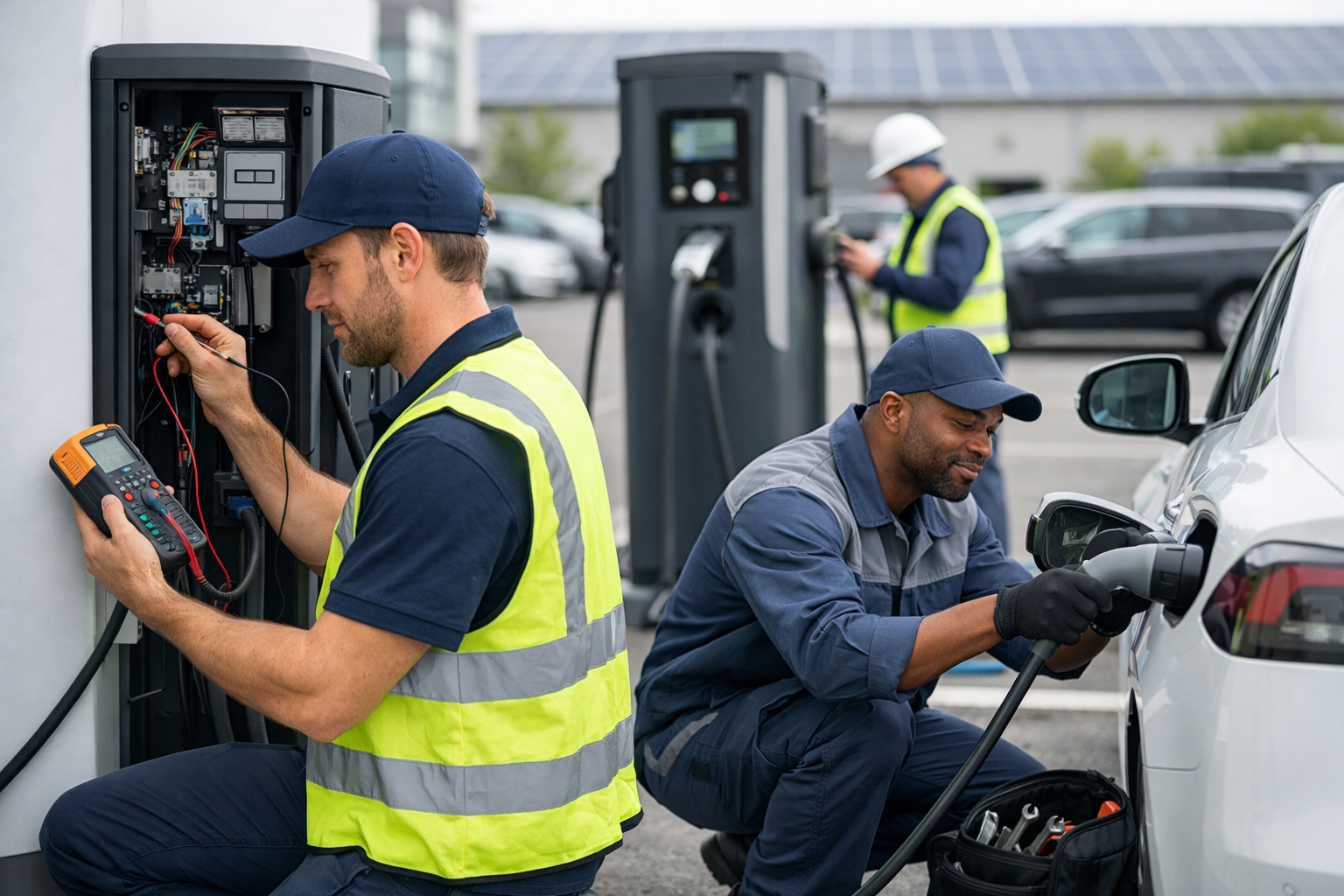
Electric vehicles are no longer limited to big cities. You can now see them in apartments, offices, and delivery fleets across towns and growing markets. That creates a real demand for professionals who can safely install and maintain EV charging stations.
If you are looking for a future ready technical service business, this is one of the most practical options to consider. It allows you to start with low investment, build long term service contracts, and grow as EV adoption increases.
In this guide, you will learn exactly how to start your EV charging installation and maintenance service, what you need to operate, and how to attract your first paying clients.
Step 1: Study how EV adoption is growing in your local area
Understanding demand is the foundation of this business. Many beginners rush into buying tools without first identifying where chargers are actually needed. That leads to wasted effort and low client interest.
This step helps you locate real opportunities so you can start with confidence instead of guesswork.
Identify common charging locations
Homes, apartments, office buildings, malls, and hotels are typical early demand areas. These places often want charging but do not know who to contact for installation.
- Look for areas where EV vehicles are already being used so you can offer services where demand already exists.
- Visit parking lots and ask owners or security staff if they are planning charging infrastructure.
Assess the type of charging needed
Some clients need only slow home chargers, while others need fast commercial chargers. Offering the wrong type can reduce your chances of closing projects.
- Understand whether the location requires residential charging or commercial grade infrastructure.
- Study the electrical load available so you can recommend the right charger capacity.
Step 2: Decide the services you will offer at the start
Trying to provide everything at once is a common mistake. It is better to begin with a clear and manageable service scope.
This step ensures you start lean and build expertise before expanding.
Home charger installation services
This is the easiest entry point. Individual EV owners need safe installation at their homes.
- Offer consultation, load assessment, installation, and testing for home based EV chargers.
- Charge a fixed installation fee so pricing remains simple for first clients.
Commercial charger setup
Commercial installations require higher safety and power planning, but they also offer better margins.
- Start with small commercial clients like apartment complexes or offices instead of large charging hubs.
- Work closely with property managers so future maintenance contracts become easier.
Maintenance and troubleshooting
Recurring service contracts build long term income for your business.
- Offer annual maintenance, repair visits, and performance testing for installed chargers.
- Educate clients on the value of preventive maintenance so they stay with your service.
Step 3: Learn the technical skills required for safe installations
This business affects public safety, so training is not optional. Many new installers rely on general electrical knowledge, which is risky when working with EV systems.
This step prepares you for professional level work.
Understand charger types and capacities
EV chargers come in different power ratings and installation methods.
- Learn how AC chargers and DC fast chargers differ in wiring and power demand.
- Identify which chargers are suitable for homes and which are meant for commercial spaces.
Practice load calculations and safety standards
Incorrect load calculation can damage equipment or cause hazards.
- Always check the building’s electrical capacity before installing a charger.
- Follow national electrical safety standards so installations meet regulatory expectations.
Partner with experienced electricians if needed
You can begin with a small trained team and expand later.
- Hire or collaborate with licensed electricians for on site installations.
- Ensure all technicians follow safety procedures and documentation.
Step 4: Register your business and understand local compliance
Operating your business legally is important for credibility and client trust. Skipping licenses can create problems when working with commercial clients.
This step helps you build a compliant and professional foundation.
Basic business registration
You can start as a sole proprietor or small company.
- Register your business name with local authorities to operate professionally.
- Open a business bank account for clear financial management.
Trade and municipal approvals
Some cities require permits for electrical infrastructure services.
- Check if your city requires a trade license for technical installation services.
- Follow any required safety and building permissions before commercial projects.
Tax compliance
You will likely work with commercial clients who expect invoicing.
- File tax once your income crosses the required threshold.
- Keep records of equipment purchases and service revenue for future tax filing.
Step 5: Invest in tools and build supplier partnerships
This is where your initial setup begins. Buying the wrong tools or sourcing low quality chargers can affect your reputation.
This step ensures you start with the right equipment and reliable support.
Essential installation tools
You need tools for safe wiring, testing, and diagnostics.
- Use professional grade voltage testers, load meters, and safety gear for all installations.
- Keep spare connectors and cables so you can quickly handle minor repair needs.
Work with EV charger manufacturers and suppliers
Suppliers can provide installation guidelines and referrals.
- Partner with trusted charger brands to offer clients reliable equipment.
- Ask suppliers if they provide training or technical updates for installers.
Plan your starter investment
You can begin with a modest budget and expand gradually.
- Start with only the tools needed for home and small commercial installations.
- Reinvest profits to upgrade your equipment and expand service capability.
Step 6: Promote your services and attract your first clients
Marketing is what converts your technical setup into real income. Many installers fail simply because they do not reach potential EV owners.
This step helps you establish visibility and trust.
Build a local professional presence
Clients prefer service providers who look reliable and specialized.
- Create a simple website or brochure explaining your EV installation services.
- Register your business on Google so local customers can find you easily.
Connect with EV showrooms and fleet operators
These businesses are directly linked to EV adoption.
- Offer referral commissions to EV dealers who send customers for charger installation.
- Approach local delivery companies and suggest charging setup for their vehicles.
Offer free site evaluation for early customers
This builds trust and helps you close your first few projects.
- Visit customer sites and explain the charging setup process before quoting.
- Highlight safety, reliability, and long term maintenance support.
Legal and Money Considerations as You Grow
As your service expands, you may need higher certifications, additional technicians, and insurance coverage. Larger commercial projects may also require specific electrical approvals.
Keep upgrading your technical knowledge and follow evolving EV infrastructure regulations to stay competitive.
Frequently Asked Questions
Is this business suitable for small towns?
Yes, EV adoption is expanding beyond big cities, and small towns now need professional installation services.
Do I need an engineering degree to start?
No, but proper electrical training and safety knowledge are essential.
Can I start from home?
Yes, you can operate as a mobile installation and service business.
How much can I earn?
Profit margins typically range from 25 to 40 percent depending on project size and service contracts.
Conclusion
Starting an EV charging installation and maintenance service allows you to enter a growing technical industry with real long term demand. It positions you at the center of a growing technological shift where infrastructure will be needed everywhere. Begin with home installations, gain experience, and expand into commercial projects as your reputation grows. This is a practical opportunity for anyone ready to build a future ready service venture.
Receive our latest articles and resources directly in your inbox