
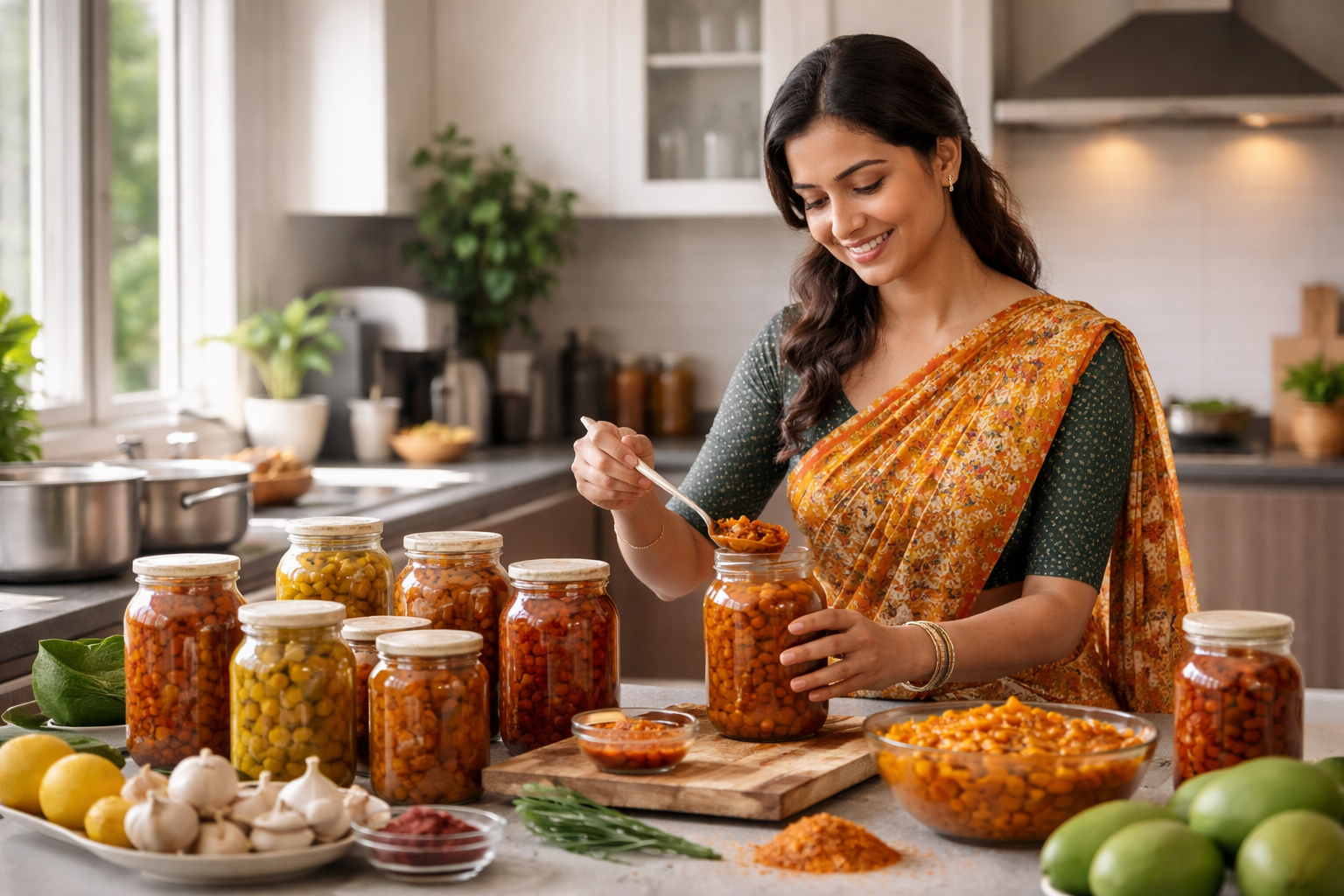
Pickle making is one of those home based businesses that quietly turns into a steady source of income when done with care and consistency. You already see how popular homemade pickles are in local markets and among families who prefer traditional taste over factory made products.
You do not need a large factory or a commercial kitchen to begin. Many successful pickle sellers start right from their home kitchens and gradually expand once their recipes gain customer trust.
The key is not just knowing how to make pickles, but how to package them safely, price them properly, and reach customers who are willing to pay for quality and authenticity.
This guide will show you how to set up your pickle making process, choose the right ingredients and equipment, build your brand, and grow your business step by step from home.
Step 1: Decide the Types of Pickles You Will Produce
This step shapes your production workflow and ingredient sourcing. Many beginners try to make too many varieties at once, which leads to inconsistent taste and quality.
Pickles have different preparation times, shelf lives, and ingredient costs. Choosing the right mix from the beginning saves effort and helps you maintain quality.
It is better to start with a few proven flavors and perfect them before expanding. This keeps your process manageable and helps you build a strong product reputation.
Focus on regionally popular flavors
Select pickles that people in your area already enjoy and buy regularly.
- Offer 3 to 5 well known varieties that match local taste preferences, rather than creating a large product list that becomes difficult to manage.
- Focus on pickles that use easily available vegetables and spices so you can maintain steady production.
Consider shelf life and spoilage risk
Some pickles last months, while others need refrigeration. Beginners often ignore this and lose money due to spoilage.
- Oil based pickles generally last longer and are safer for beginners because they require less temperature control.
- Avoid fresh or water based pickles at first since they can spoil quickly if not handled correctly.
Balance ingredient cost with demand
Some ingredients are expensive, and if demand is low you may not recover your cost.
- Choose recipes where the raw material is affordable and available year round so your pricing remains stable.
- Avoid pickles that require seasonal fruits unless you are ready for bulk production during that season.
Step 2: Set Up Your Kitchen for Production
A home based pickle business must operate like a small food unit, not like everyday cooking. Cleanliness and consistency are what separate a business from a hobby.
If your workspace is not organized, you will struggle with hygiene, storage, and scaling later.
Create a dedicated pickle making zone
Using the same counter for daily cooking and business production increases contamination risk.
- Keep a separate shelf and working area only for your pickle preparation and packaging.
- Store your ingredients and finished jars away from household items to maintain food safety.
Use the right utensils and containers
Improper utensils can affect taste and hygiene. Metal reactions are a common beginner mistake.
- Use food grade plastic or glass containers for mixing and storing pickles to prevent chemical reactions.
- Avoid using iron or aluminum vessels since they can change the flavor and reduce shelf life.
Plan for drying and curing space
Many pickles require sunlight or drying time. Not planning this causes rushed production and spoilage.
- Keep trays or racks in a well ventilated area where your pickles can cure naturally without moisture buildup.
- Ensure the space is protected from dust and insects to maintain product quality.
Step 3: Source Quality Ingredients That Maintain Authentic Taste
Buying ingredients in small quantities raises your cost and reduces profit. Bulk sourcing ensures better margins and consistent supply.
Consistent sourcing builds product reliability and repeat demand.
Choose seasonal produce for better flavor
Fresh and seasonal ingredients create richer and more natural taste.
- This improves product quality without raising costs unnecessarily.
- Customers also notice the difference in freshness.
Buy raw materials from wholesale markets
Retail stores are convenient but expensive. Wholesale markets offer better pricing for business use.
- Purchase vegetables, fruits, oil, and spices from bulk suppliers so your production cost remains controlled.
- Always check freshness and quality, since poor ingredients directly affect taste and brand reputation.
Step 4: Package and Label Your Pickles Professionally
Packaging is what transforms a homemade product into a sellable business item. Many beginners ignore this and end up looking unprofessional even if the pickle itself tastes great.
Good packaging also protects product freshness and builds trust.
Select food safe packaging containers
Customers will judge your product by how it looks and how well it is sealed.
- Use glass jars with airtight lids because they preserve flavor and extend shelf life better than plastic.
- Make sure every container is washed and dried properly before filling to avoid contamination.
Design clear and simple product labels
Include product name, ingredients, preparation date, and storage instructions so customers feel confident buying. Use simple, clean labels rather than flashy designs that distract from authenticity.
- This builds customer confidence and transparency.
- It also helps your product stand out in local markets.
Maintain batch consistency and branding
Uniform packaging and taste create long term customer loyalty.
- Consistency builds a recognizable brand identity.
- It also helps you command better pricing over time.
Step 5: Standardize Your Recipes and Batch Size
Consistency is the backbone of any food business. If one jar tastes different from the next, customers will not return.
You need to treat your recipes like a formula, not a rough method.
Measure ingredients accurately
Guessing quantities leads to uneven flavor and poor quality.
- Use measuring cups and spoons so every batch has the same balance of spice, salt, and oil.
- Record your exact recipe for each variety so you can repeat it without mistakes.
Fix your batch size for production
If you change batch size every time, the pickle quality will fluctuate.
- Start with a manageable batch quantity that you can prepare and sell within a reasonable time.
- Increase the batch size only after you are confident about demand and storage.
Test shelf life before selling
Selling pickles that spoil quickly damages your reputation.
- Keep a sample from each batch and observe it for several weeks to understand its storage stability.
- Adjust oil or salt levels if required to improve preservation.
Step 6: Understand Legal and Food Safety Requirements
Since you are selling a food product, basic food business approval is required in most countries. Ignoring this can result in penalties or forced closure.
This step protects both your customers and your business.
Check if small food producers need registration
Most places require even home based food businesses to register once sales begin.
- Contact your local food safety authority to understand what kind of license or registration is needed for home production.
- Start with the smallest category available so your setup remains simple and affordable.
Maintain proper hygiene and handling
Food contamination is one of the biggest risks in homemade pickle businesses.
- Always wear gloves, head cover, and clean clothing while preparing and packing your pickles.
- Keep a strict cleaning routine for your workspace and utensils to meet safety expectations.
Learn basic labeling and storage rules
Incorrect storage instructions can cause spoilage or health issues.
- Clearly mention how customers should store your pickles, such as refrigeration or keeping in a cool dry place.
- Ensure your ingredients and preparation process meet local food quality standards.
Step 7: Price Your Pickles for Profit
Pricing is not just about covering cost, it is about earning from your effort. Many beginners price too low and end up working for almost nothing.
Your goal is to balance affordability with healthy profit.
Calculate ingredient and packaging cost per jar
Without knowing your real cost, you cannot set the right price.
- Add the cost of vegetables, oil, spices, jars, labels, and your time to estimate the total cost per unit.
- Aim for an average profit margin of around 30 percent to 50 percent in this business.
Compare with similar products in your market
Pricing too high or too low can hurt sales.
- Study how other homemade pickle sellers price their jars and position yourself within that range.
- Offer introductory pricing only for your first few customers to build trust.
Offer different jar sizes
Different customers have different buying power and usage needs.
- Smaller jars are easier for new customers to try and increase your chances of repeat orders.
- Larger jars help improve your profit per sale when customers already trust your product.
Step 8: Start selling through trusted local channels
You do not need a shop to sell pickles from home. Many successful home based food businesses rely on local networks and online platforms.
Selling smartly helps you grow faster with less risk.
Sell to friends, neighbors, and local shops first
Your first customers should be people who trust homemade products.
- Offer tasting samples to build confidence and collect feedback before scaling.
- Approach small grocery stores and local food shops to stock your jars on a commission basis.
Use social media and messaging platforms
Pickles sell well when people see the freshness and preparation process.
- Share photos and short videos of your pickle making process to attract customers naturally.
- Take orders through direct messages or phone calls to keep your operation simple at the beginning.
Provide home delivery or pickup options
Convenience increases repeat sales.
- Offer local delivery within a reasonable distance so customers prefer ordering from you rather than buying factory packed pickles.
- Allow customers to collect from your home to reduce your logistics cost.
Step 9: Expand Varieties and Production as You Grow
Once you understand which flavors sell best, you can expand your product range. Scaling without demand is a common mistake that leads to unsold stock.
Growth should always follow customer preference, not guesswork.
Introduce new flavors gradually
Expanding slowly allows you to test market response.
- Add one new pickle variety at a time instead of launching several at once.
- Keep the same quality standards so your brand image remains strong.
Increase production based on confirmed orders
Overproduction results in waste and financial loss.
- Prepare larger batches only after receiving steady demand from customers or shops.
- Track your monthly sales so you can plan future stock properly.
Consider packaging upgrades later
Professional packaging becomes important as you scale.
- Move to better sealing and labeling methods when your production increases.
- Invest in bulk packaging only when your sales justify it.
Step 10: Legal and Money Considerations as You Grow
For small scale home sales, formal registration may not be required immediately. However, once your business expands or you start supplying to shops or online customers, you must follow local food safety and trade regulations.
Check your local municipal authority for food handling permits and home business approvals. If you scale further, you may also need tax registration and proper billing depending on your country and sales volume.
- Keep basic records of sales, expenses, and customer orders from the beginning so scaling becomes easier later.
- As you grow, consult a local professional to ensure your food business meets all safety and tax requirements.
Frequently Asked Questions
Do I need a large kitchen to start this business
No, you can start from a small clean section of your kitchen as long as you maintain hygiene and separation from daily cooking.
Which pickles are easiest for beginners to sell
Oil based traditional pickles like mango, lemon, mixed vegetable, and chili usually sell well and have longer shelf life.
How much profit can I expect from this business
A well run home based pickle business can offer profit margins between 30 percent and 50 percent depending on pricing and sourcing.
Can I sell pickles without a food license at the beginning
Small test sales to friends may be fine, but once you sell publicly or through shops, basic food business registration is usually required.
How do I make my pickles stand out
Consistency, cleanliness, good taste, and honest labeling help build trust and repeat customers.
Is packaging really that important?
Yes, professional packaging builds trust, protects the product, and allows you to charge better prices.
Can this business run with one person?
Yes, most home based pickle businesses start as a one person or family managed operation.
How long can homemade pickles last for selling?
If prepared and stored correctly, many oil based pickles can last several months. Always test shelf life before selling and mention storage instructions clearly.
How many varieties should I begin with?
Starting with two or three strong selling flavors is ideal. Expanding too early often leads to waste and confusion.
Is this business profitable at small scale?
Yes, because pickles have good profit margins and repeat demand. Profit depends on your pricing, quality, and local customer base.
Final Thoughts
Launching a pickle business from home gives you a low risk entry into the food industry. Keep your recipes consistent and your packaging clean to earn customer trust. Sell locally first and then grow your reach. This can gradually turn into a rewarding and scalable business.
Receive our latest articles and resources directly in your inbox