
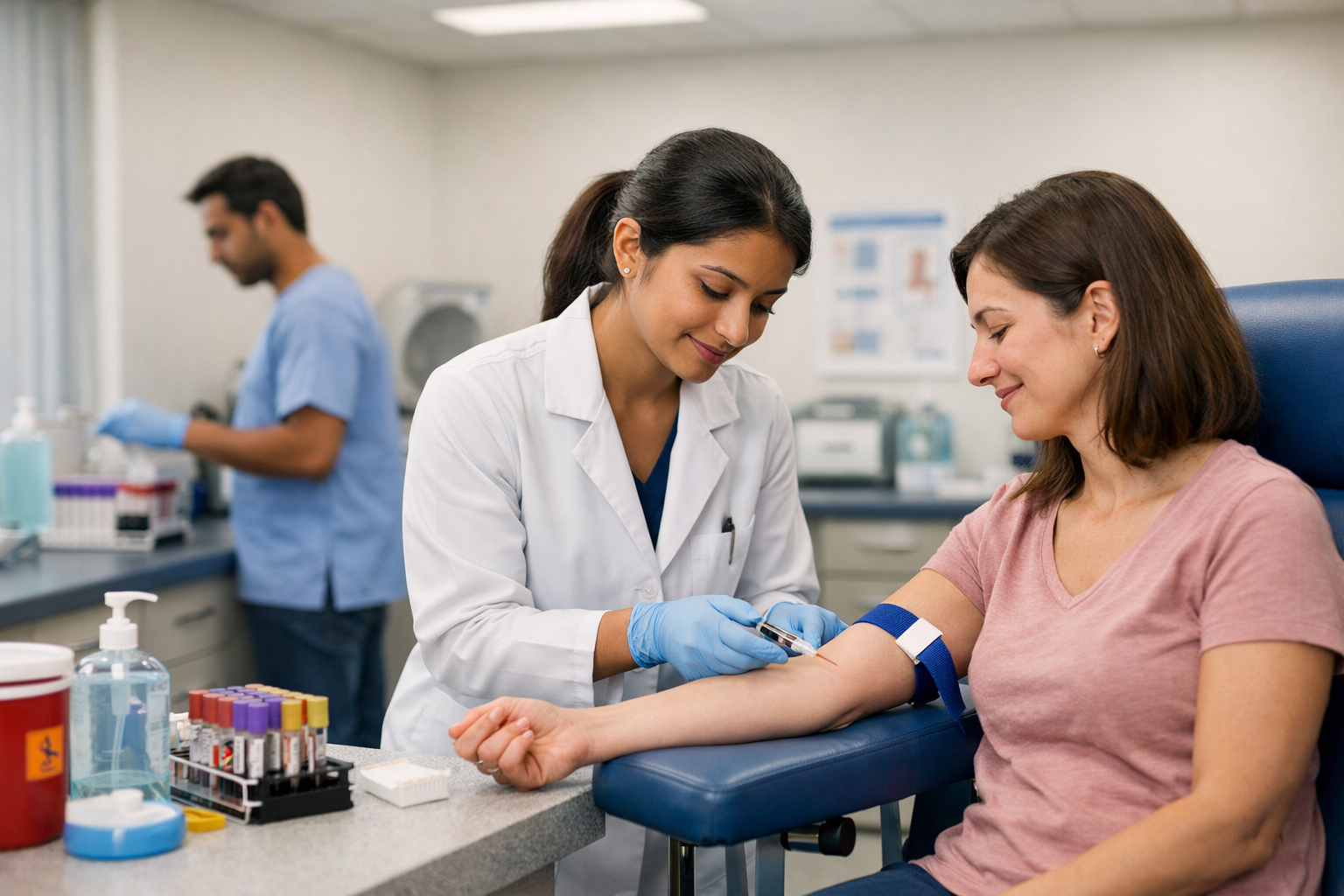
The demand for diagnostic testing is growing everywhere, with people needing blood tests, urine tests, and routine checkups daily. This makes a lab collection center a practical business with steady, reliable footfall.
You don’t need to run a full-fledged lab from day one. The key is ensuring samples are collected properly, stored safely, and delivered accurately to testing labs.
This guide will help you understand how to start a diagnostic lab collection center, avoid common operational mistakes, and build a setup that works as both a healthcare service and a sustainable business.
Step 1: Understand How a Diagnostic Collection Center Actually Works
A diagnostic lab collection center is different from a full testing laboratory. Your role is to collect samples correctly, store them safely, and send them to a parent lab for testing. Many beginners confuse the two and overspend on equipment they do not need.
Understanding this operating model helps you keep the business lean, compliant, and profitable. It also shapes your staffing, space requirements, and partnership decisions from day one.
Difference between collection and testing labs
A collection center focuses on patient interaction, sample handling, and documentation, while the parent lab performs the actual analysis. This separation reduces setup cost but increases responsibility for accuracy during collection.
- You do not need advanced analyzers or testing machines, which significantly lowers initial investment.
- Errors at the collection stage can still invalidate reports, so training and process discipline matter greatly.
Revenue flow and commission structure
Most collection centers earn through a commission or revenue share from the parent laboratory.
- Margins usually range between 20 to 40 percent depending on test volume and agreement terms.
- Higher volume often matters more than high margins in this business.
Patient trust and repeat demand
People often return to the same collection center once they feel comfortable with staff behavior and hygiene standards. This makes service quality a long term asset.
- Clear communication and gentle sample collection increase repeat visits.
- Poor handling spreads quickly through word of mouth and damages credibility.
Step 2: Choose the Right Location and Space Setup
Location is one of the biggest success factors for a collection center. Even a well managed setup struggles if patients find it inconvenient or hard to access.
Unlike retail shops, this business benefits from calm surroundings, easy parking, and proximity to medical activity. Overcrowded commercial areas are not always ideal.
Ideal neighborhood and footfall sources
Areas near clinics, hospitals, pharmacies, or residential zones with senior citizens perform consistently better. Patients prefer short travel for fasting tests or early morning visits.
- Locations near doctor clusters often generate referrals without paid marketing.
- Ground floor access is strongly preferred for elderly and unwell patients.
Minimum space and layout planning
A compact but well organized space works better than a large unfocused one. Clean separation between waiting, collection, and storage areas is essential.
- A total area of around 150 to 300 square feet is usually sufficient.
- Even small spaces must allow privacy during sample collection.
Hygiene focused interior setup
Patients subconsciously judge credibility by cleanliness. Flooring, lighting, and wash areas influence trust more than branding.
- Easy to clean surfaces reduce daily maintenance effort.
- Adequate ventilation helps maintain sample integrity and staff comfort.
Step 3: Decide Whether to Start Independently or Through a Franchise
Diagnostic collection centers commonly operate under franchise or partner models with established laboratories. This option reduces trial and error but comes with restrictions.
Choosing between independent and franchise routes depends on your experience, risk appetite, and long term plans. Both models can work if aligned correctly.
How franchise based collection centers operate
In a franchise model, you operate under a parent lab brand and follow their protocols. The lab handles testing, reporting, and often marketing support.
- Franchisors usually provide branding, training, and sample logistics.
- You focus mainly on local operations and patient handling.
Independent center with lab tie ups
An independent setup allows you to partner with one or more labs without exclusive branding. This offers flexibility but requires stronger relationship management.
- You can negotiate better rates as volume grows.
- Marketing and process design remain your responsibility.
Step by step franchise startup process
Franchise onboarding usually follows a structured path that simplifies early decisions.
- Initial inquiry and evaluation of terms and service coverage.
- Agreement signing, space approval, and interior setup as per guidelines.
- Staff training, system onboarding, and supervised launch phase.
Step 4: Complete Legal and Regulatory Requirements
A diagnostic collection center directly affects public health, so regulatory compliance is not optional. Skipping approvals can lead to shutdowns even if operations are smooth.
Rules vary by country and city, but the underlying intent is patient safety, hygiene, and traceability.
Business registration and local permissions
You will need basic business registration and permission to operate a healthcare related facility. Local municipal approvals are often required for premises use.
- Trade licenses confirm that your location is approved for commercial healthcare activity.
- Some regions require a specific health establishment registration.
Healthcare specific approvals and supervision
Many jurisdictions require a qualified pathologist or medical professional to be associated with the center, even if testing is outsourced.
- The supervising professional may not be present daily but must be officially linked.
- Display of registration certificates is usually mandatory.
Step 5: Set Up Equipment, Supplies, and Sample Logistics
Equipment needs are modest but non negotiable in terms of quality. Using low grade supplies can compromise sample integrity and lab acceptance.
Logistics planning ensures samples reach the lab within acceptable time windows.
Essential collection and storage equipment
Your setup must support safe collection and temporary storage for different sample types.
- Phlebotomy chairs, centrifuge if required, and refrigeration units are common essentials.
- Temperature monitoring is critical for certain tests.
Consumables and infection control supplies
Daily consumables form a recurring cost but directly impact safety and compliance.
- Single use needles, vacutainers, gloves, and disinfectants are mandatory.
- Proper disposal bins for bio waste are legally required.
Sample transport coordination
Timely pickup or drop off arrangements with the lab are crucial for report accuracy.
- Scheduled pickups reduce delays and missed testing windows.
- Clear labeling and documentation prevent sample rejection.
Step 6: Hire and Train the Right Staff
The right team ensures accuracy, efficiency, and patient satisfaction. Mistakes in hiring or training are common causes of operational issues in new labs.
Recruit Skilled Technicians and Support Staff
Qualified personnel maintain test quality and provide a professional experience.
- Hire certified lab technicians and phlebotomists.
- Include reception and administrative staff to manage scheduling, billing, and patient queries.
Provide Practical Training
Even skilled staff need guidance on your center’s specific processes and workflow. Training prevents errors and builds consistency.
- Train staff on sample collection, labeling, storage, and documentation.
- Emphasize patient communication and hygiene protocols.
Step 7: Manage Daily Operations and Patient Experience
Smooth operations turn a functional center into a trusted one. Patients often judge your service during stressful moments, so calm and clarity are essential.
Appointment handling and walk in flow
Balancing scheduled appointments with walk ins reduces waiting time and frustration.
- Early morning slots are critical for fasting tests.
- Clear instructions improve compliance and sample quality.
Report delivery and follow ups
Most complaints arise from delays or confusion around reports.
- Digital report access improves satisfaction.
- Proactive follow ups reduce repeated patient calls.
Building local referral relationships
Doctors and clinics are strong referral sources when trust is established.
- Consistent accuracy builds professional confidence.
- Ethical practices sustain long term relationships.
Frequently Asked Questions
Do I need to own a lab to start a collection center?
No, you can partner with accredited labs to process samples while focusing on collection and patient service.
How much space is required to start
Most collection centers operate efficiently within 200 to 400 square feet when planned properly.
How many staff members are needed initially?
Typically, 2 to 4 trained phlebotomists, 1-2 administrative staff, and a coordinator are enough for a small center.
What tests should I offer first?
Begin with routine blood, urine, and stool tests along with preventive health packages that match local demand.
Is special equipment mandatory from day one?
Start with basic collection and storage equipment, adding advanced machinery only when expanding services.
How do I handle sample transport efficiently?
Partner with certified labs and establish strict SOPs for timely, safe sample transport to maintain result integrity.
Do I need a medical degree to start a diagnostic collection center
No, but most regions require a qualified medical professional to be officially associated with the center for compliance purposes.
Can I operate with more than one partner lab
Yes, independent centers often work with multiple labs to offer wider test menus and better pricing.
What is the average profit margin in this business?
Collection centers generally earn 20 to 35% margin on routine tests, depending on location and service efficiency.
How can I attract patients?
Partner with local clinics, offer home collection services, and use digital channels for scheduling and awareness.
What is the biggest beginner mistake in this business
Ignoring compliance details and underestimating the importance of trained staff are common early errors.
Final Thoughts
Running a diagnostic lab collection center is about earning confidence and maintaining high standards every day. Consistency in hygiene, reporting accuracy, and customer care turns ordinary operations into a respected and profitable venture. Long-term success grows from reliability and trust, not shortcuts.
Receive our latest articles and resources directly in your inbox