
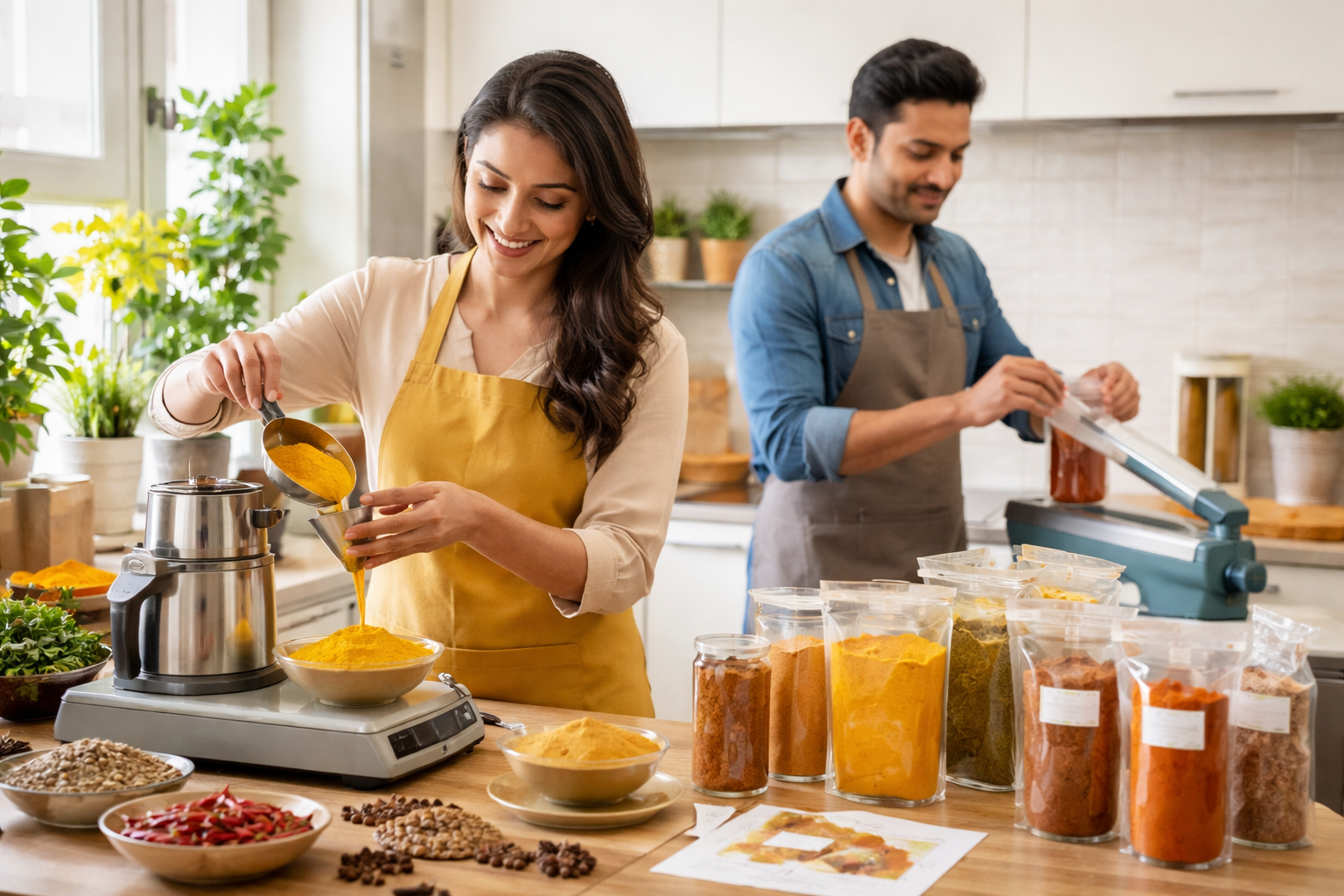
The demand for fresh, high-quality spices continues to grow, making home-based production an attractive opportunity. You do not need a factory or expensive machines to begin.
What you need is a clear process, patience during the early batches, and a solid understanding of what customers truly value in spices.
This guide walks you through each stage of starting a spice processing business from home, showing you how to start small, avoid common mistakes, and build a spice business with confidence.
Step 1: Decide the Exact Spice Products You Will Make
Choosing what to produce is the foundation of your spice business. Many beginners fail by trying to sell too many items at once, which increases costs and confusion. Focusing on a small and specific range helps you control quality and build trust faster.
Different spices behave differently during drying, grinding, and storage. Understanding these differences early prevents waste and inconsistent results later.
Single spice versus blended masalas
Single spice powders like turmeric, chilli, or coriander are easier to standardize and explain to customers. Blended masalas offer higher margins but require careful balance and consistent flavor profiles.
- Start with two or three single spices to master processing and storage before adding blends.
- Use blended masalas only after you understand how each ingredient reacts to heat and moisture.
Demand patterns in your local area
Spice preferences change by region, cooking style, and household habits. Selling what people already use daily reduces your marketing effort.
- Observe nearby grocery stores to see which spice packets sell fastest.
- Talk to home cooks, small eateries, and caterers to learn their regular requirements.
Shelf life and spoilage risks
Some spices lose aroma quickly or attract moisture faster than others. Ignoring shelf life leads to complaints and returns.
- Turmeric and chilli powders store well if dried properly and packed airtight.
- Spices like cumin and fennel need extra care because oils evaporate faster after grinding.
Step 2: Source Raw Spices with Consistent Quality
Raw material quality directly decides how your final spice smells, tastes, and sells. Buying cheap spices with uneven drying or mold damage will show up clearly after grinding. Customers notice this immediately, even if they cannot explain it.
Home based producers often underestimate how much variation exists between batches. Learning how to judge raw spices protects your reputation.
Choosing whole spices instead of pre cleaned stock
Whole spices give you better control over cleanliness and freshness. Pre cleaned stock may save time but often hides quality issues.
- Inspect whole spices for uniform color, size, and natural aroma before buying.
- Avoid lots that feel damp or smell musty, even if priced attractively.
Local wholesalers versus farmers
Where you buy from affects both price and reliability. Each option has trade offs.
- Wholesalers offer convenience and steady supply but quality may vary by batch.
- Farmers can provide fresher produce but supply may depend on harvest cycles.
Buying in small batches initially
Large purchases lock up cash and increase storage risk when you are still learning.
- Start with quantities you can process and sell within two to three weeks.
- Increase volume only after confirming consistent grinding results and customer acceptance.
Step 3: Set Up a Clean and Efficient Home Workspace
Your production area does not need to look like a factory, but it must follow strict cleanliness habits. Spices absorb moisture, odors, and dust easily, which affects flavor and safety. A disciplined setup keeps quality stable.
This step matters because once contamination happens, grinding only spreads the problem further.
Dedicated processing area
Mixing kitchen cooking and spice processing creates hygiene risks and smell transfer.
- Use a separate room or a clearly divided section of your kitchen.
- Keep pets, shoes, and unrelated items completely out of the area.
Drying and grinding flow
A smooth workflow reduces handling errors and saves time.
- Dry spices fully before grinding to avoid clumping and microbial growth.
- Grind in small batches so heat does not burn the spice oils.
Basic equipment selection
You do not need industrial machines at the beginning, but quality tools matter.
- Use a sturdy mixer grinder or small pulverizer designed for dry grinding.
- Keep separate containers and spoons for each spice to prevent flavor mixing.
Step 4: Develop a Consistent Grinding and Quality Process
Grinding is where many home spice businesses lose consistency. Changes in grind size, heat, or batch size affect color and aroma. Customers expect the same experience every time they buy.
Documenting your process early helps you repeat success instead of guessing each batch.
Drying standards before grinding
Moisture is the biggest enemy of spice powder quality.
- Sun dry or air dry spices until they snap cleanly rather than bending.
- Avoid grinding spices that feel cool or slightly soft to the touch.
Grind size control
Too fine or too coarse grinds change cooking behavior.
- Test different grind sizes and cook small samples to judge flavor release.
- Stick to one grind setting once customers approve the texture.
Batch testing before packing
Never pack directly after grinding without checking.
- Smell and visually inspect each batch for uniform color.
- Discard any batch that smells burnt or uneven, even if the quantity is small.
Step 5: Package Spice Powders for Freshness and Trust
Packaging is not just about looks, it protects aroma, color, and shelf life. Poor packaging undoes all the hard work done earlier. Customers also judge cleanliness through packaging.
Start simple but intentional. You can always upgrade once sales stabilize.
Choosing food safe packaging material
Wrong plastic or thin covers allow moisture and odor transfer.
- Use food grade pouches or containers with tight seals.
- Avoid reused or thin bags that tear easily.
Label clarity and honesty
Customers read labels carefully when buying food products.
- Clearly mention spice name, net weight, packing date, and best before period.
- Avoid exaggerated claims that you cannot consistently support.
Small pack sizes initially
Smaller packs reduce risk for both you and the buyer.
- Offer packs that customers can finish quickly while still fresh.
- Increase pack sizes only after demand and trust are established.
Step 6: Price Your Spice for Profit and Sustainability
Pricing too low feels attractive but kills motivation and quality over time. Pricing too high without brand trust slows sales. This step balances both.
Your price must cover costs, effort, wastage, and small profits.
Calculating real cost per packet
Ignoring electricity, packaging, and wastage leads to hidden losses.
- Include raw material, packaging, utilities, and labor value.
- Add a buffer for unsold or returned stock.
Understanding local market expectations
Customers compare with known brands even if quality differs.
- Study prices of similar sized packets locally.
- Explain freshness and small batch value when pricing slightly higher.
Wholesale versus direct selling margins
Selling through shops reduces effort but also reduces margins.
- Keep separate pricing for retail and wholesale.
- Avoid undercutting your own retailers when selling directly.
Step 7: Start Selling Through Simple and Reliable Channels
Selling does not require complex marketing at the beginning. Trust and word of mouth matter more in food products. Focus on places where people already buy cooking essentials.
Gradual expansion keeps operations manageable.
Local household sales
Your first customers often come from nearby homes.
- Offer samples to neighbors and request honest feedback.
- Encourage repeat orders rather than one time bulk sales.
Small retailers and kirana stores
Retailers test products before committing shelf space.
- Start with small consignments to prove movement.
- Replace unsold stock quickly to maintain freshness.
Direct orders from eateries
Small food businesses value consistent flavor.
- Supply limited quantities to one or two regular clients first.
- Maintain the same grind and aroma to avoid complaints.
Step 8: Handle Legal and Food Safety Requirements Properly
Spice making is a food business and cannot ignore basic compliance. Many home businesses run informally at first, but planning early avoids penalties and stress later.
Rules vary by country, state, and city, so always verify current local regulations.
Trade licenses and local permissions
Many towns require a basic trade or shop license for food processing.
- Check municipal or local authority requirements for home based food businesses.
- Obtain written permission if operating from a residential area.
Food safety registration
Food handling businesses usually need food safety approval.
- Register under the applicable food safety authority for your country.
- Follow hygiene, labeling, and storage guidelines strictly.
Step 9: Improve and Scale Without Losing Quality
Growth should not compromise the trust you have built. Many spice businesses fail during expansion because quality slips quietly.
Scaling slowly keeps control in your hands.
Process documentation
Write down every step once it works well.
- Note drying time, grind duration, and batch size.
- Use the same process even when volumes increase.
Equipment upgrades
Bigger machines change grinding behavior.
- Test new equipment with small batches first.
- Adjust drying and grinding times accordingly.
Customer feedback tracking
Feedback guides smarter decisions.
- Pay attention to repeat buyers rather than one time opinions.
- Improve based on consistent patterns, not isolated comments.
Frequently Asked Questions
Can I really start this business from my home kitchen
Yes, many successful spice brands started at home. You must maintain strict cleanliness and follow local food safety rules.
How much investment is needed initially
A basic setup usually requires a modest budget for grinder, raw spices, and packaging. Starting small keeps risk low.
How long do homemade spice powders last
Shelf life depends on drying, grinding, and packaging quality. Most well prepared powders stay fresh for several months.
Is branding important at the beginning
Basic labeling is enough initially. Strong branding becomes important as you expand beyond local sales.
What is the biggest beginner mistake
Trying to sell too many products too quickly without mastering consistency.
Final Thoughts
Starting a spice making business at home is practical, achievable, and deeply connected to everyday cooking habits. When you focus on quality, cleanliness, and gradual growth, trust builds naturally. Small disciplined steps matter more than big plans in this business. If you stay patient and consistent, your home setup can turn into a reliable and respected food brand.
Receive our latest articles and resources directly in your inbox