
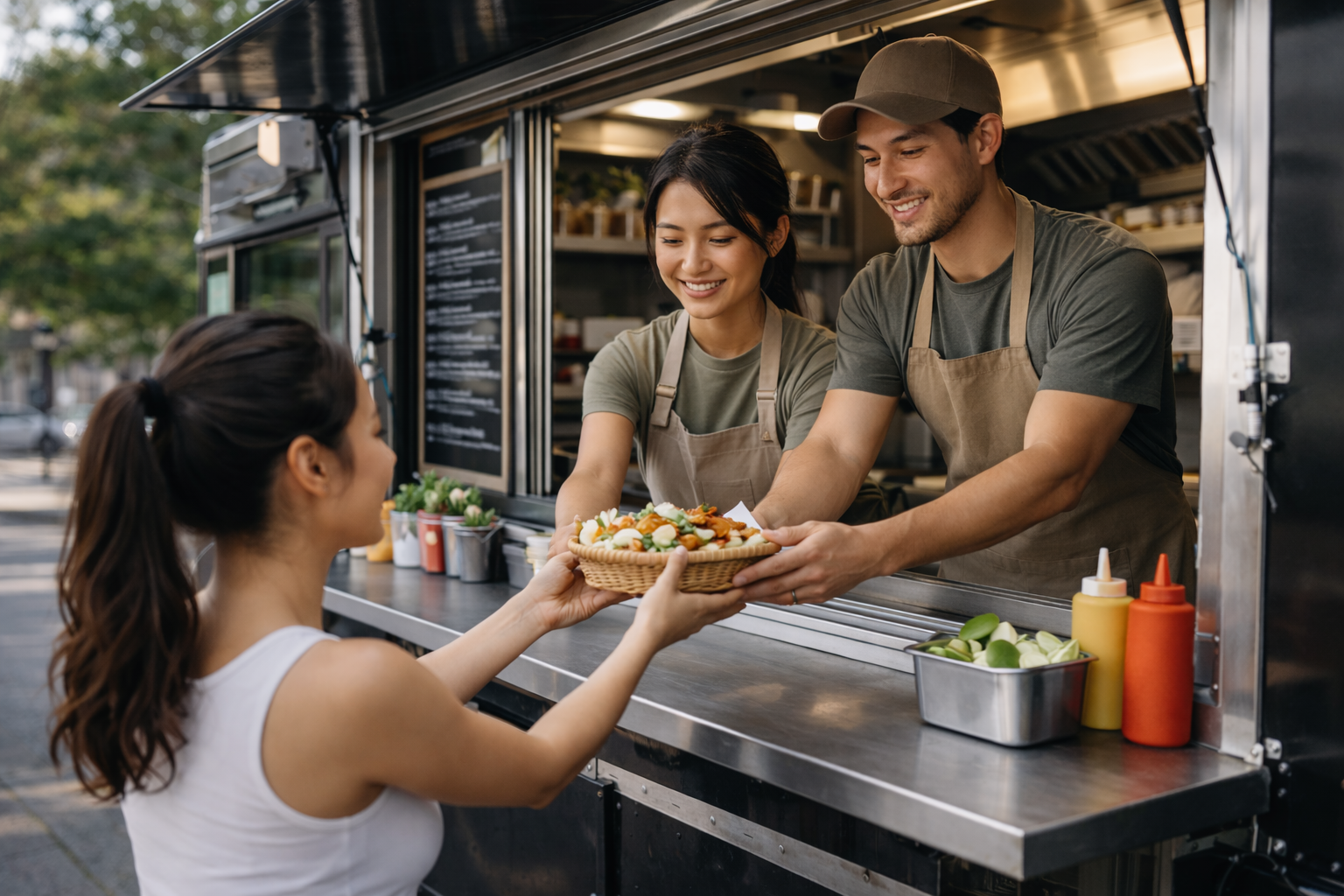
From what I have seen, many people imagine a food truck as an easy way to sell tasty meals while being your own boss. The reality, however, is more nuanced. Success depends on planning, location, menu choices, and understanding the logistics of mobile food operations. I have watched beginners struggle when they underestimate these factors.
Starting a food truck is exciting because it offers flexibility, direct customer interaction, and lower overhead than a full-scale restaurant. But you need to approach it like any serious business. This guide will walk you through each step, sharing practical insights, common mistakes, and lessons learned from real-world examples.
By the end, you will know exactly how to plan, set up, and operate a food truck business efficiently, so you can confidently take your first orders on the road.
Step 1: Decide on Your Food Concept and Menu
Before you buy a truck or equipment, you need a clear idea of what food you will serve. From experience, many beginners jump in with vague ideas and struggle to attract repeat customers. Your concept guides everything from the truck layout to marketing.
Bold and Unique Menu Options
Your menu should be distinctive enough to stand out but not so complex that you cannot execute it consistently.
- Focus on a few signature items that highlight your style and expertise.
- Avoid copying popular trucks exactly, as local tastes and trends vary.
Pricing Strategy for Mobile Sales
Setting prices incorrectly can sink a food truck fast. You need to balance affordability with profitability.
- Calculate ingredient costs and overhead per dish before deciding on pricing.
- Factor in location-specific demand, as prices in busy downtown areas can differ from suburbs.
Menu Test Runs
Testing your menu before launch saves costly mistakes. Small pop-ups or catering for friends can reveal real-world challenges.
- Use feedback to refine recipes, portion sizes, and prep times.
- Track which items are popular and which may need adjustment.
Step 2: Research Local Regulations and Licensing
Food trucks are physical businesses, so legal compliance is non-negotiable. Many new owners overlook permits or misunderstand rules, leading to fines or shutdowns. Taking this step seriously upfront saves stress later.
Trade and Health Permits
Operating legally requires municipal approvals for food preparation and sales.
- Obtain health department certifications, which may include kitchen inspections and hygiene training.
- Some cities require a mobile food vendor license specific to food trucks.
Zoning and Parking Rules
Where you park and sell matters. Not all locations are open to food trucks.
- Check municipal zoning laws to confirm allowed street or event locations.
- Understand time restrictions, safety regulations, and parking fees.
Step 3: Choose and Outfit Your Food Truck
The truck is your workspace and brand showcase. From what I have seen, a poorly planned setup can create workflow nightmares and slow service. Investing in the right vehicle and equipment is critical.
Selecting the Right Vehicle
The size, layout, and condition of your truck determine what you can cook and how efficiently you serve.
- Consider a used truck to save money but inspect for mechanical and electrical issues.
- Ensure the interior allows safe food prep, storage, and ventilation.
Kitchen Equipment and Storage
Your menu dictates what equipment is essential. Overcrowding or missing tools slows operations.
- Plan for ovens, fryers, refrigerators, and prep surfaces based on your menu.
- Allocate storage for ingredients, packaging, and cleaning supplies without cluttering the workspace.
Branding Your Truck
Your truck is a moving advertisement. From experience, visible, attractive designs draw more customers.
- Use bright colors, clear signage, and menu displays that can be read from a distance.
- Ensure your branding communicates your food style and vibe.
Step 4: Plan Your Operations and Supply Chain
Running a food truck is fast-paced. Many beginners fail because they underestimate prep time, ingredient management, or staff requirements. Solid operations planning keeps service smooth and customers happy.
Sourcing Ingredients
Fresh, consistent ingredients are the backbone of a successful menu.
- Build relationships with reliable suppliers for daily or weekly deliveries.
- Keep backups for key items to prevent shortages during busy periods.
Staffing and Roles
Even small trucks may need help. Clear role assignment prevents chaos.
- Hire staff trained in food prep and customer service if you cannot handle all duties alone.
- Define shifts and responsibilities for peak and off-peak hours.
Workflow Efficiency
The order-to-delivery process must be optimized to avoid delays.
- Map your prep, cooking, and serving flow inside the truck.
- Test different setups during practice runs to see what speeds up service without compromising quality.
Step 5: Market Your Food Truck and Build a Customer Base
Even the best food and truck setup fails without customers. From what I have seen, strong local marketing drives first-time trials and repeat visits.
Local Social Media Presence
Social media helps communicate your location, menu updates, and special events.
- Post daily or weekly schedules so followers know where to find you.
- Use stories or live videos to showcase behind-the-scenes prep and customer reactions.
Community Engagement
Participating in events and collaborating with local businesses creates loyal fans.
- Join farmers markets, street fairs, or food festivals to increase visibility.
- Offer limited-time promotions or loyalty incentives to encourage repeat visits.
Feedback and Adaptation
Listening to customers allows your business to evolve.
- Collect reviews and ratings online and in-person to identify areas for improvement.
- Adjust menu, pricing, or locations based on real customer insights.
Step 6: Legal and Money Considerations as You Grow
Even if you start small, tracking finances and staying compliant is key for growth. Many beginners ignore this until problems arise.
Budget Tracking
Maintaining a simple ledger helps you see profitability.
- Record all expenses including fuel, ingredients, and permits.
- Monitor daily sales to identify trends and plan stock accordingly.
Scaling Considerations
Expanding to multiple trucks or catering larger events requires planning.
- Consider vehicle maintenance, extra staff, and inventory logistics.
- Ensure permits and licenses allow scaling operations legally.
Frequently Asked Questions
Do I need a commercial kitchen to start a food truck?
Not always, but some regions require health-certified prep spaces. Many trucks operate using in-truck kitchens that meet local health codes.
How much money do I need to start a food truck?
Startup costs vary widely. From what I have seen, expect to invest in the truck, equipment, permits, initial inventory, and branding, typically ranging from moderate to high five figures.
Can I operate a food truck alone?
Yes, for simple menus, one person can manage. For complex dishes or high-volume events, having at least one assistant improves service and safety.
Do food trucks make profit quickly?
Profitability depends on location, menu, and customer volume. Many beginners underestimate marketing and operating costs, which can slow profit growth.
How do I find good locations to park?
Research high-foot-traffic areas, local events, and business districts. Trial and error, combined with social media updates, often reveal the most profitable spots.
Conclusion
Starting a food truck requires planning, persistence, and attention to detail, but the learning curve is rewarding. Each step you take, from menu development to marketing, builds confidence and skill. Mistakes will happen, but progress comes from adapting and refining your operations. With the right mindset, your food truck can become a successful, mobile culinary business.