
If you own a property or are planning to rent one out, income is probably your main concern. You want a setup that earns well, fits your schedule, and does not become a daily headache.
Airbnb and homestays are two popular ways to earn from short stay and long stay guests. Both can be profitable when managed properly. Both reward hosts who deliver comfort, cleanliness, and good service.
In this article, you will learn how Airbnb and homestays compare in real earning potential, costs, effort, and long term stability. You will see realistic income ranges, what actually affects profit, and how to decide which option fits your situation.
Understanding Airbnb and Homestay in Real Life
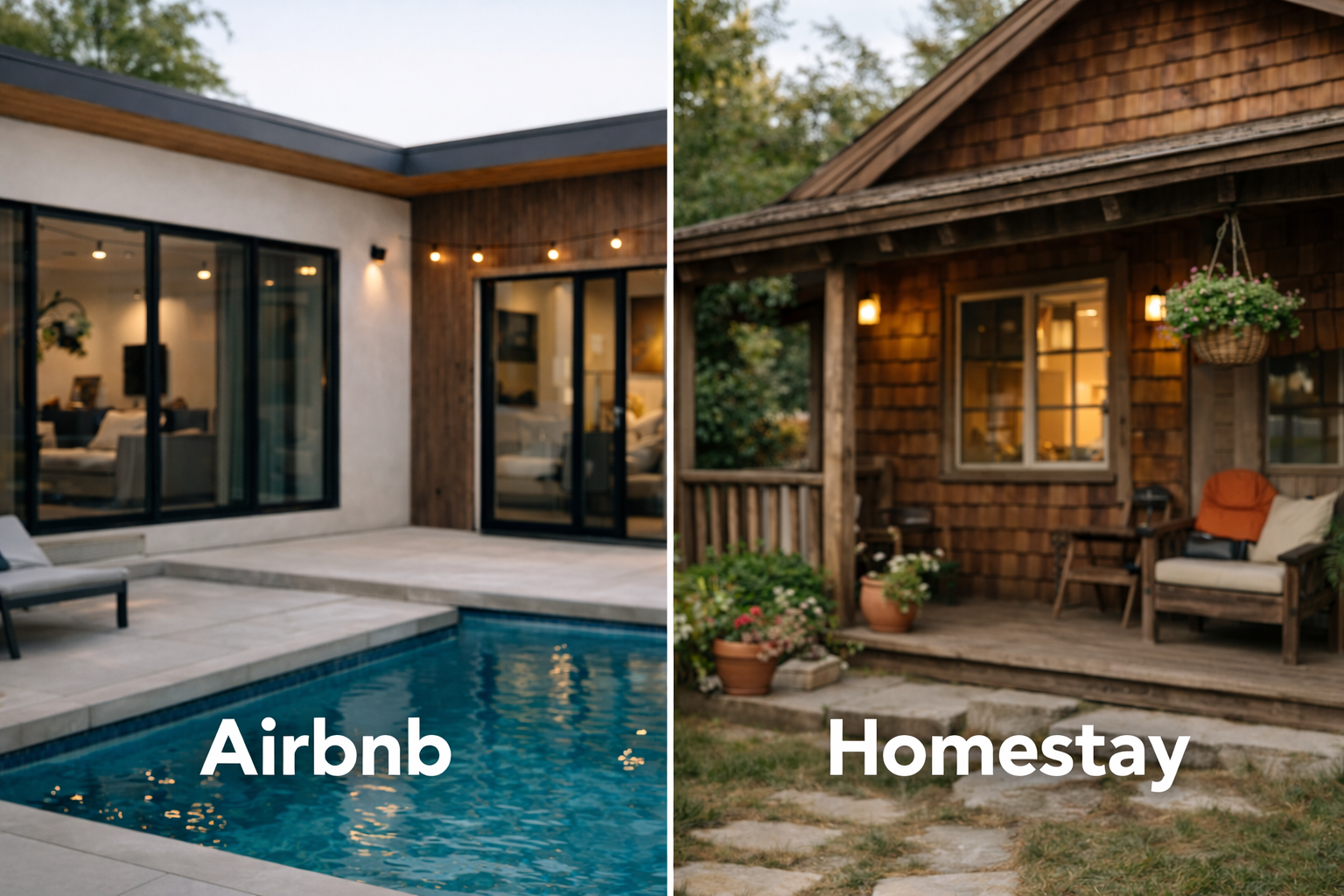
Airbnb is a short stay rental model. Guests usually book for a few nights at a time. You list your property on the Airbnb platform, set nightly prices, and manage bookings through the app. Prices change often based on demand, season, and competition.
A homestay usually focuses on longer stays and a more personal experience. Guests may stay in the same home as the host or rent part of the property. Some homestays operate like small guesthouses, but the pace is slower and guest turnover is lower.
The key difference is speed. Airbnb runs fast and changes often. Homestays run slower and feel more predictable.
How Much Money Can You Actually Make
Income depends on location, demand, season, and how well the property is managed. Still, some patterns are common.
Airbnb usually charges higher nightly rates. However, bookings can fluctuate a lot. Some months are great. Others can be quiet.
Homestays charge lower nightly rates but often enjoy better occupancy. Guests stay longer and cancellations are fewer.
To understand this clearly, consider a simple example.
An Airbnb charging $150 per night and booking 15 nights in a month earns around $2250 before expenses.
A homestay charging $80 per night and booking 25 nights earns around $2000 before expenses.
Airbnb wins on peak income potential. Homestays win on consistency.
Expenses That Reduce Your Profit
Revenue alone does not tell the full story. Costs matter just as much.
Airbnb expenses are usually higher because of frequent guest turnover. Cleaning happens often. Linen and furniture wear out faster. Platform service fees also apply. If you hire staff or use professional cleaners, costs rise further.
Homestay expenses are simpler. Cleaning is less frequent. Maintenance is predictable. Utilities may be slightly higher because guests stay longer, but overall costs are easier to control.
In many cases, Airbnb earns more but also spends more. Homestays earn less but keep a higher percentage of what they make.
Time and Effort Required
Airbnb demands active involvement. You answer guest messages quickly, manage pricing often, coordinate cleaning, and handle check ins and check outs regularly. If something breaks, you must fix it fast to protect reviews.
Homestays require less daily management. You deal with fewer guests, fewer check ins, and fewer urgent issues. The effort is more about hospitality and less about operations.
If you enjoy systems, speed, and optimization, Airbnb suits you. If you prefer stability and human interaction, homestays feel easier.
Risk and Income Stability
Airbnb income can change overnight. A few bad reviews, a drop in travel demand, or a platform rule change can reduce bookings quickly. This makes Airbnb higher risk but also higher reward.
Homestays are more stable. Guests often stay longer and sometimes return. Income is easier to predict. The downside is limited upside. You rarely see sudden income spikes.
Think of Airbnb as variable income with strong peaks. Think of homestays as steady income with fewer surprises.
Growth and Scaling Potential
Airbnb scales better as a business. Once systems are in place, you can manage multiple properties. Cleaning can be outsourced. Pricing can be automated. Some hosts grow into full rental operations.
Homestays scale slower because they rely more on personal involvement. Managing many homestays usually means managing people closely, which limits expansion.
If long term growth matters to you, Airbnb offers more room to expand.
Which Option Is More Profitable for You
Airbnb tends to make more money if your property is in a tourist friendly area and you can manage operations well.
Homestays often perform better for owners who live on the property or want reliable monthly income without constant effort.
There is no universal winner. The better option depends on your time, skills, and risk tolerance.
How to Improve Earnings in Either Model
Regardless of the model, a few principles apply.
Pricing should reflect demand, not guesswork. Review nearby listings regularly and adjust prices based on season and events.
Guest experience directly affects income. Clean spaces, clear rules, and quick communication lead to better reviews and repeat stays.
Tracking expenses monthly is essential. Many hosts lose profit simply because they do not monitor costs closely.
Final Takeaway and Action Plan
Airbnb usually offers higher earning potential, especially in strong markets, but comes with higher effort and risk. Homestays provide steadier income with simpler operations and lower stress.
If your goal is to maximize income and you are comfortable managing actively, Airbnb is often the better option. If your goal is predictable income with fewer daily demands, a homestay can be more profitable over time.
A simple action plan is to study demand in your area, calculate realistic occupancy, estimate monthly costs, and test one model for three months. Real data will guide you better than assumptions.
Frequently Asked Questions
Which is more profitable, Airbnb or homestay?
Airbnb typically offers higher per night rates but with variable occupancy, while homestays provide lower rates but steadier long term income.
How much can you make monthly with Airbnb?
Monthly Airbnb income varies widely by location and property type. A private room might earn $800 to $2,000 monthly, while entire properties in desirable locations can generate $2,000 to $6,000 or more. Actual earnings depend on nightly rates, occupancy percentage, and seasonal demand.
What’s the typical income from hosting a homestay student?
Homestay rates typically range from $600 to $1,200 monthly for room and breakfast, or $800 to $1,800 monthly when including three meals daily. Rates vary by location, services provided, and whether you’re working through agencies or directly with schools.
Is Airbnb or homestay less work?
Homestay requires daily interaction and meal preparation but minimal turnover work. Airbnb needs constant booking management, frequent cleaning, and guest communication but less daily involvement. Homestay is steadier daily effort, while Airbnb is concentrated around each guest changeover.
Can you do both Airbnb and homestay at the same time?
Yes, if you have multiple rooms. You can host a long term homestay student in one room for stable income while Airbnbing another room for flexibility and extra earnings. This diversifies your income and balances predictability with higher earning potential.
Which has fewer regulations, Airbnb or homestay?
Homestays generally face fewer regulations because you live in the home with guests. Many cities heavily regulate or restrict Airbnb style short term rentals with permits, taxes, and occupancy limits. Always check your local laws before starting either model.
Do you need special insurance for Airbnb or homestay?
Airbnb requires short term rental insurance as standard homeowner policies exclude commercial activity. Costs range from $500 to $2,000 annually. Homestays may not need special insurance but check with your provider, as some require notification of long term paying guests.
What’s the biggest risk with each hosting model?
For Airbnb, the main risks are property damage from frequent guests, bad reviews hurting bookings, and market saturation reducing occupancy. For homestays, the biggest risk is incompatible guests making your home uncomfortable for extended periods with limited recourse during contracted stays.
Is Airbnb income riskier
Yes. Airbnb income changes faster due to reviews, demand shifts, and platform policies.
Can I switch between Airbnb and homestay
Yes. Many owners change models based on season or guest demand.
Which is easier for beginners
Homestays are usually easier due to fewer operational demands.
Receive our latest articles and resources directly in your inbox