
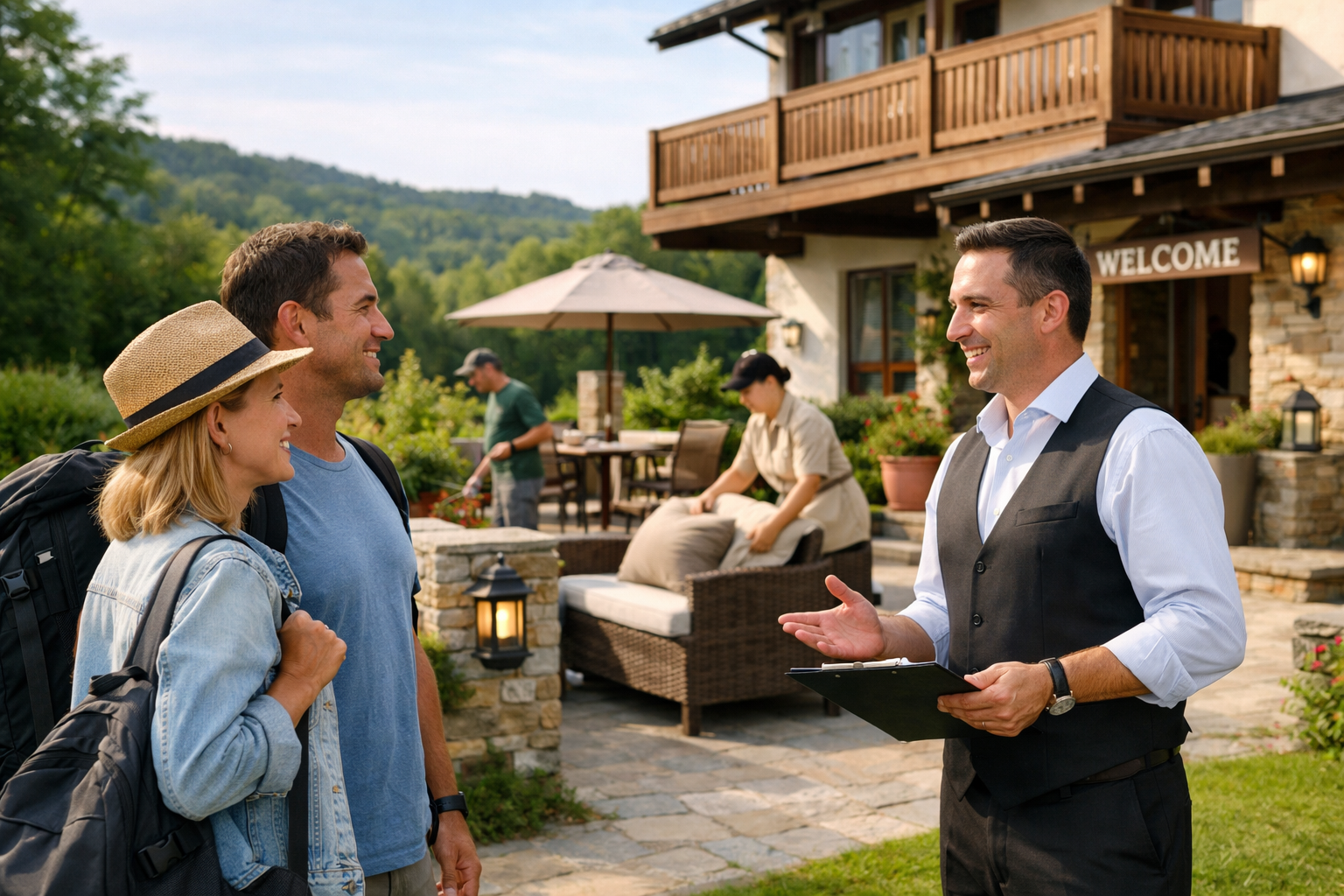
If you have ever traveled for work, exams, or family events, you already know how important a clean and affordable place to stay is. That constant need makes lodges and guest houses a dependable business opportunity, especially in growing towns and cities. This guide helps you understand how to set one up in a practical and realistic way.
Many first time owners focus only on building rooms, but overlook location, service quality, and legal approvals. Those are the factors that actually determine success. This guide explains each stage clearly so you can build your lodge the right way.
Whether you want to open a small guest house or a larger lodge, this step by step approach will help you create a strong and sustainable setup.
Step 1: Analyze the travel demand and ideal location for your lodge
This step determines whether your guest house will stay occupied or sit empty. A good building in the wrong location rarely succeeds, while a simple setup in a high demand area can perform well.
Look for places near transport hubs, tourist spots, hospitals, colleges, or business centers where travelers regularly need accommodation.
Understand who will stay at your property
Your main customers decide what kind of rooms and services you should offer. A lodge near a highway will attract different guests than one near a tourist attraction.
- Travelers on work trips usually prefer clean, simple rooms with reliable service.
- Tourists and families look for comfortable rooms and easy access to local attractions.
Study existing lodges and occupancy levels
Knowing how others operate in your area helps you position your own guest house effectively.
- Observe their pricing, cleanliness, room size, and customer feedback.
- If they are always full, it shows strong demand and opportunity for you.
Avoid choosing a location only because land is cheap
Lower cost areas may reduce your setup expense, but they also reduce your bookings.
- A lodge must be easily accessible and visible to travelers.
- Paying slightly more for a better location usually improves long term returns.
Step 2: Decide the Type of Stay You Want to Offer
Your lodge or guest house will attract different guests depending on how you position it. A budget traveler expects very different service compared to a family on vacation or a business guest on a short trip. Many beginners fail because they try to serve everyone and end up satisfying no one.
This decision affects your location, room size, furniture, pricing, and even staffing. Getting this wrong means you will constantly struggle with low occupancy or mismatched expectations.
Budget lodge for short stays
A budget focused lodge works well near transport hubs, highways, and markets where travelers need a simple overnight stay.
- Keep rooms simple but extremely clean, as price sensitive guests value hygiene more than decor.
- Avoid adding luxury features that increase your cost but do not increase your bookings.
Family guest house for longer visits
Family stays need more comfort, safety, and space, especially for groups traveling together.
- Provide larger rooms or interconnected rooms so families feel they are getting value.
- Offer basic amenities like hot water, storage space, and quiet surroundings, as families avoid noisy places.
Business traveler friendly lodge
Business guests look for reliability, speed, and basic comfort rather than decoration.
- Provide good lighting, clean washrooms, and stable internet so they can work without issues.
- Avoid complicated check in procedures that delay their arrival or departure.
Step 3: Decide Your Lodge Size and Setup Style
Starting too large creates unnecessary financial pressure, while starting too small may limit your growth. You should match your lodge size with your local demand and your budget.
Choose the number of rooms you will start with
Beginners often build too many rooms at once, then struggle to maintain or fill them.
- A small lodge can start with 5 to 10 rooms, which is easier to manage and test your market.
- Plan expansion only after you consistently achieve good occupancy.
Select room categories based on guest budget
Your guests will choose rooms based on comfort and pricing, so variety helps.
- Offer basic single rooms, double rooms, and a few premium rooms, so you can serve different guest types.
- Avoid luxury styling in all rooms at the beginning, because it increases cost without guaranteed returns.
Plan shared versus attached bathrooms
This choice directly affects your construction cost and guest pricing.
- Shared bathrooms reduce initial cost, but may limit your ability to charge higher room rates.
- Attached bathrooms attract better paying guests and improve comfort, but require more plumbing and maintenance.
Step 4: Set up the required furniture and in room amenities
Guests judge your lodge based on comfort and practicality, not luxury alone. Many new lodge owners lose customers because they cut corners on beds, bathrooms, and cleanliness.
Focus on providing value and reliability rather than unnecessary decoration.
Select durable and easy to maintain furniture
Since this is a high usage environment, your furniture must handle frequent guests.
- Use strong beds, wardrobes, and seating that are simple to clean.
- Avoid delicate or hard to maintain items that increase your long term costs.
Install essential utilities for guest comfort
Basic amenities are expected in every room.
- Ensure continuous water supply, proper lighting, and secure door locks.
- Provide fans or air cooling depending on your local climate and guest expectations.
Maintain uniform quality across all rooms
Inconsistency creates negative reviews and trust issues.
- Guests expect the same cleanliness and comfort in every room they book.
- Standardize your setup to build reliability and repeat customers.
Step 5: Hire and train staff for daily lodge operations
Even a small guest house requires proper manpower. Trying to run everything alone usually leads to poor service and negative guest experiences.
A well trained team ensures smooth functioning and guest satisfaction.
Assign clear roles for reception and housekeeping
Each responsibility in your lodge should have a dedicated person.
- Reception staff handle bookings, check in, and guest communication.
- Housekeeping staff manage room cleaning, linen changes, and daily maintenance.
Train your team in guest interaction and hospitality
Friendly and responsive service makes guests return.
- Staff should greet guests properly and resolve issues quickly.
- A good customer experience leads to word of mouth marketing.
Plan your workforce size based on room count
Do not hire too many people at the start, but also avoid being understaffed.
- One receptionist and one or two housekeeping staff can handle small lodges.
- As you expand, increase your manpower accordingly.
Step 6: Set your room pricing and service structure
Your pricing must reflect your location, facilities, and competition. Do not set random rates that either push guests away or leave money on the table.
A balanced pricing model helps you attract guests while maintaining healthy margins.
In this line of business, average profit margin can range between 30 to 50 percent depending on occupancy and service quality.
Compare your rates with nearby lodges
Understanding local price expectations prevents underpricing or overpricing.
- Study what competitors charge for similar room sizes and amenities.
- Adjust your rates based on comfort level and added services you provide.
Offer flexible pricing for different guest types
Not all customers pay the same, and that is normal.
- Short stays and single travelers may prefer budget rooms.
- Families and tourists are often willing to pay more for comfort and space.
Avoid price wars in the beginning
Competing only on low price hurts your brand and profitability.
- Focus on cleanliness, safety, and reliable service to stand out.
- This allows you to maintain fair and sustainable pricing.
Step 7: Establish your booking and promotion channels
Guests must be able to find and book your lodge easily. Relying only on walk in customers limits your reach and occupancy.
Use both local and online methods to increase your bookings.
List your lodge on online travel and map platforms
Online visibility helps travelers discover your property before arriving.
- Add your lodge to map listings and accommodation directories.
- Include real photos and clear pricing to build credibility.
Promote locally through travel agents and businesses
Your first customers often come from nearby sources.
- Partner with travel agents, hospitals, colleges, and event organizers.
- Offering them a referral incentive can help build consistent bookings.
Encourage guest reviews and repeat stays
Reputation plays a huge role in this industry.
- Positive guest experiences lead to better online ratings.
- Good reviews naturally increase your bookings over time.
Step 8: Obtain the necessary licenses and approvals to operate legally
Since you are providing accommodation to the public, legal approvals are required. Ignoring this step can lead to penalties or forced closure.
Rules vary by country and city, so always confirm with your local authority.
Apply for municipal lodging and trade permits
These approvals allow you to legally run your guest house.
- Authorities may inspect your building for safety, sanitation, and guest capacity.
- A clear layout and proper facilities help you pass inspections smoothly.
Complete basic tax and business registration
As your guest volume grows, formal registration becomes essential.
- This allows you to work with travel agencies and corporate clients.
- Staying compliant improves your credibility and long term stability.
Follow fire and safety requirements for guest accommodation
Safety standards protect both you and your guests.
- Install basic fire extinguishers and emergency exit signage.
- This ensures your lodge meets legal and operational expectations.
Frequently Asked Questions
How large should a lodge or guest house be at the start?
A small lodge can begin with 5 to 10 rooms and basic facilities, then expand as demand increases.
Can I run a lodge from my home property?
Yes, if you have enough space or rooms to host guests comfortably.
Do I need government approval to run a guest house?
Yes, most cities require a local trade license to legally operate.
Is food service necessary in a guest house?
Not mandatory, but offering simple breakfast or tea can improve guest satisfaction and revenue.
What is the biggest mistake new lodge owners make?
Ignoring cleanliness, pricing discipline, and legal approvals, which quickly damages reputation and operations.
How many staff members are required for a small lodge?
2 to 4 people can manage reception, cleaning, and maintenance for a small property.
What makes a guest house successful?
Clean rooms, safe premises, reliable water supply, and friendly staff build long term trust and repeat bookings.
Is this a profitable business?
Yes, profit depends on occupancy rate, location, and how efficiently you manage operations.
Final Thoughts
Your lodge or guest house can turn into a long term source of income when you focus on guest comfort, cleanliness, and a convenient location. Guests prefer properties that feel safe, well maintained, and professionally handled. Once you establish smooth operations, scaling your setup becomes simpler and more sustainable.
Receive our latest articles and resources directly in your inbox