
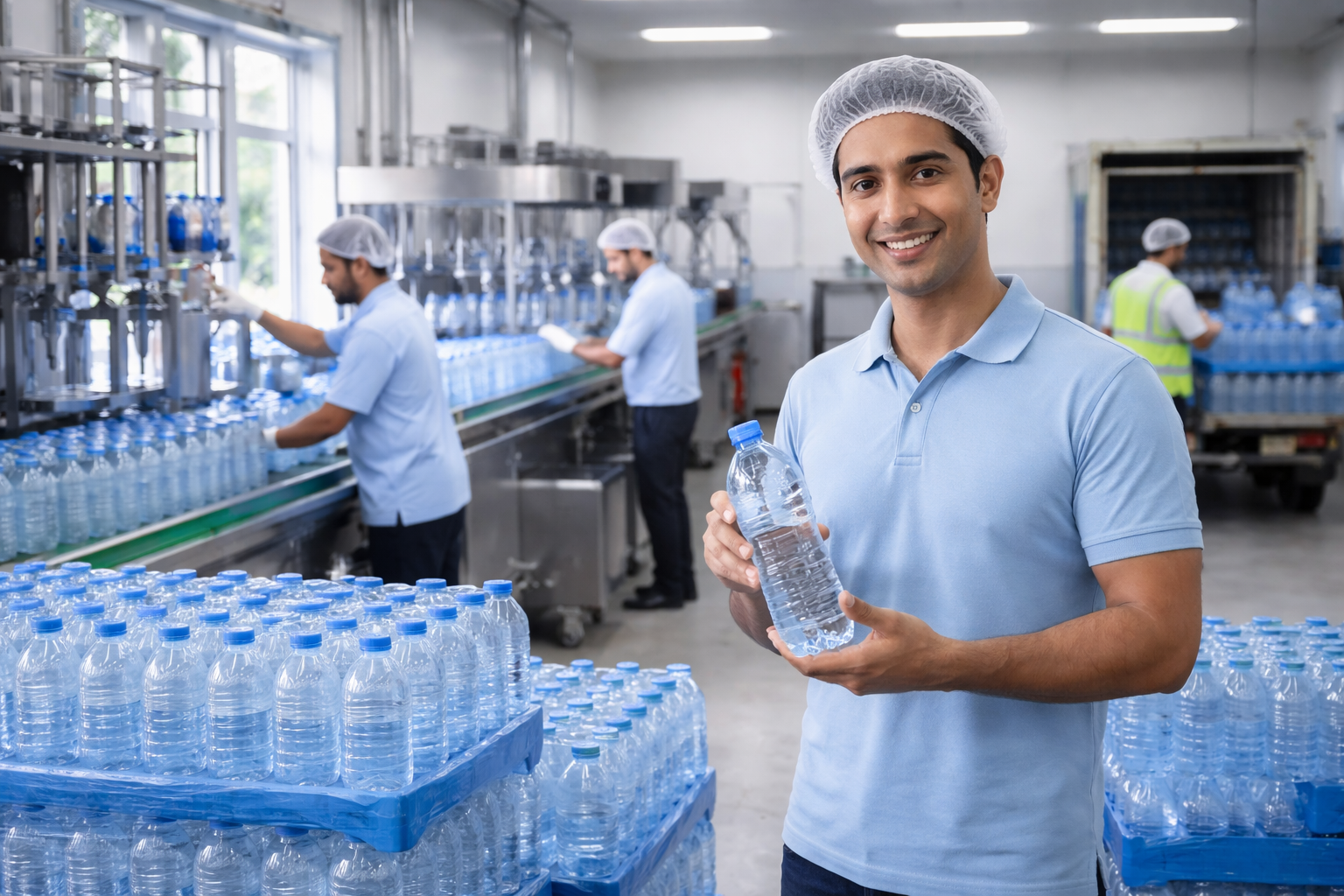
If you look around your city, you will notice how often people rely on bottled water for daily use, travel, and events. That steady demand makes packaged drinking water one of the most practical and scalable physical businesses you can start. This guide walks you through how to set it up the right way from day one.
Many new entrants underestimate the importance of water quality standards, licensing, and plant setup. Skipping these steps can quickly lead to losses or even shutdowns. That is why this article focuses on real world operations, not just basic ideas.
This guide takes you through all the essential steps for starting a packaged drinking water business, from water sourcing and quality assurance to purification, compliance, production setup, staffing, and customer acquisition. It provides practical insights so you can confidently launch and grow your own brand.
Step 1: Study the local demand and competition for packaged water
This step helps you avoid building a plant in a location where the market is already saturated. Many beginners jump straight into buying machinery without checking if nearby suppliers are already covering the demand.
Understanding your local customers also tells you what bottle sizes sell more, which helps you reduce waste and plan production efficiently.
Identify high consumption customer segments
Different buyers use packaged water in different ways. Your sales will depend heavily on where the real demand comes from.
- Hotels, restaurants, offices, hospitals, and event organizers usually purchase water in bulk and give repeat orders.
- Residential areas often buy larger cans for daily household use, which creates steady long term demand.
Observe existing water brands and pricing patterns
This gives you a realistic picture of what customers are already paying and expecting.
- Compare the pricing, bottle quality, and delivery service of nearby suppliers before deciding your own price.
- Notice if they are struggling with supply gaps, as this can be your entry opportunity.
Avoid selecting a random plant location
Your location should reduce your logistics cost and allow you to deliver quickly.
- Placing your plant far from customers increases transportation effort and lowers your profit.
- Starting in a high demand area gives you faster sales and better brand visibility.
Step 2: Decide Your Water Source and Quality Level
Your entire business depends on your water source. Many businesses struggle not because of demand, but because their water source is unreliable or too contaminated.
You need a reliable and legally permitted water source that you can use long term. Changing sources later is expensive and affects your brand trust.
Your plant location also matters for transport, daily operations, and regulatory approvals. Setting up in the wrong place increases delivery time and overall operating expenses.
Select a safe and consistent water source
Water can be sourced from bore wells, municipal supply, or natural springs. Each comes with its own purification challenges and legal considerations.
- Bore well water is common for small plants, but may need advanced filtration for iron and salinity.
- Municipal water is safer, but availability and pressure can be inconsistent in some regions.
Water testing before finalizing
Never skip lab testing at this stage. It tells you what purification setup you need and what recurring treatment costs will look like.
- Test for TDS levels, bacteria, and chemical contaminants.
- Use this report to design your purification process.
Step 3: Set Up the Water Purification and Treatment System
This is the core of your business. If the purification system is poorly designed, your water will not pass quality tests, and your brand will lose trust immediately.
Many new entrepreneurs try to save money here, but that leads to unsafe water and regulatory trouble.
Install a multi stage purification system
A reliable packaged water plant uses processes like filtration, reverse osmosis, ultraviolet treatment, and ozone sterilization.
- Reverse osmosis is essential if your water has high dissolved solids or salinity.
- Ultraviolet and ozone treatment ensure bacteria free water at the final stage.
Choose equipment capacity based on your expected demand
Your daily production depends on the size and number of water jars or bottles you plan to sell.
- A small starter plant usually begins with a 500 to 1000 liters per hour purification unit.
- Upgrade only when demand increases.
Include water storage and hygiene handling systems
Proper storage tanks and pipelines maintain water purity until it is packed.
- Use food grade storage tanks to avoid contamination from rust or plastics.
- Always separate untreated and treated water pipelines to avoid mixing.
Ensure regular water testing and quality checks
Quality is not a one time task, it must be monitored continuously.
- Test your water frequently for purity levels, bacteria, and chemical content.
- Keep proper test records to show inspectors and customers that your water is safe.
Avoiding common purification mistakes
Many small operators ignore maintenance and filter replacement, which affects water taste and safety.
- Schedule filter changes based on usage, not time.
- Keep a maintenance log so your staff follows a fixed routine.
Step 4: Arrange Packaging and Filling Machinery
Your packaging defines your brand image and your daily production speed. Many businesses fail because their packaging looks unprofessional or their filling process is slow and unhygienic.
Choosing the right machinery ensures consistent output and reduces labor dependency.
Bottle washing and rinsing setup
You need a proper bottle washing system before filling. Reusing bottles without correct cleaning is one of the biggest beginner mistakes.
- Use an automated bottle washer if your scale is medium. Automatic jar washing machines help reduce contamination risks and labor costs.
- Use a manual but multi stage washing setup if you are starting small. If you wash manually, you must follow strict hygiene practices every time.
Install automatic filling and sealing machines
This is where treated water is filled into jars or bottles and sealed for delivery.
- Automatic machines maintain accurate fill levels and reduce wastage.
- Sealing equipment ensures your product remains tamper proof during transport.
Choose packaging materials that support your brand
Your bottles, jars, caps, and labels are the first thing customers notice.
- Use durable, food grade jars for repeated household and office use.
- Printed labels with batch details build customer trust and regulatory compliance.
Create an organized packaging and storage area
Without proper space, bottles can get mixed up or damaged.
- Separate areas for empty bottles, filling, sealing, and final storage reduce confusion and errors.
- Keep the finished water away from direct sunlight and dust.
Step 5: Set Up Your Production Facility and Layout
Your facility must be clean, well ventilated, and easy to manage. Poor layout leads to contamination risk and inefficient operations.
You do not need a large factory in the beginning, but your space must support safe water handling.
Facility size and zoning
You should divide the space into raw water storage, purification, bottling, and finished goods storage.
- A small facility can start with 400 to 800 square feet.
- Ensure proper drainage and washable flooring.
Raw and finished water storage tanks
You need separate food grade tanks for untreated and treated water.
- Use stainless steel tanks to avoid contamination.
- Clean storage tanks regularly to maintain quality.
Production flow planning
Your workflow should move from washing to filling to packing without crossing paths.
- Keep washing and filling areas physically separated.
- Train your staff to follow one directional movement only.
Step 6: Hire and train the right manpower for daily operations
A packaged water business requires more than just machines. Your staff handles purification, bottling, delivery, and customer service, so their training directly impacts your reputation.
Training is especially important because this is a health related product.
Assign clear roles for plant and field work
Each part of the operation needs responsible handling.
- Plant workers focus on filtration, filling, cleaning, and stock management.
- Delivery staff handle order fulfillment and customer relationships.
Train your team on hygiene and safety practices
Since this is a public health product, strict cleanliness is essential.
- Workers must wear clean gloves and follow proper handling methods to avoid contamination.
- Even a small hygiene lapse can damage your brand’s trust.
Plan for basic transport and delivery support
Your delivery capability decides how fast you can serve customers.
- A small vehicle for local supply is enough when starting.
- Ensure bottles are transported securely so they do not leak or break.
Step 7: Set your pricing and profit strategy based on real costs
Packaged drinking water is a volume business. Your success depends on balancing production cost, delivery effort, and customer affordability.
On average, profit margins in this business can range from 25 to 40 percent, depending on your local competition and efficiency.
Calculate your production and distribution cost
This helps you set sustainable prices without undercutting yourself.
- Include expenses for purification, bottling, labor, packaging, and delivery.
- Pricing too low can hurt your growth and make expansion difficult.
Offer attractive pricing for bulk customers
Large buyers give you stable income and reduce marketing effort.
- Hotels, offices, and event suppliers often negotiate rates, so plan your margins accordingly.
- Retaining bulk customers helps you run your plant at full capacity.
Avoid random discounts without planning
Every price reduction should have a purpose, not just to win customers.
- Instead of discounts, offer reliable delivery or better packaging to stand out.
- This helps you compete on value, not just price.
Step 8: Get the required licenses and approvals to operate legally
Since this business directly affects public health, approvals are mandatory before you start selling. Ignoring this step can lead to penalties or plant closure.
Always check your local regulations because requirements vary by country and city.
Apply for municipal trade and water supply permissions
These allow you to legally operate a packaged water plant.
- Your local authority will inspect your facility to ensure it meets hygiene and safety standards.
- Keeping your plant layout clear and organized makes this process easier.
Register for food and safety certifications
These approvals confirm that your water meets drinking standards.
- You will need to submit your water for lab testing before receiving final clearance.
- Renew these certifications periodically to maintain compliance.
Complete your tax and business registration
Once your sales increase, proper registration becomes essential.
- This allows you to supply to large clients who require invoices and official records.
- Staying compliant also builds credibility for long term growth.
Step 9: Build Your Brand and Distribution Network
Your success depends on how quickly and consistently you supply your water. Production without distribution leads to stock waste.
Focus first on your local area where transport costs stay low.
Design a recognizable and professional brand identity
Your brand name, label design, and packaging influence how customers perceive quality.
- Use clear labels with purity claims and batch details to build credibility.
- Avoid overpromising, as customers value honesty in this industry.
Start with focused delivery areas
Expanding too fast makes delivery unreliable and damages your reputation.
- Begin by serving nearby homes, offices, and shops consistently.
- Once operations are stable, expand to restaurants, schools, and commercial spaces.
Partner with local retailers and businesses
This increases your reach and daily sales volume.
- Retail shops can help you sell bottled water at events and gatherings.
- Offices and hostels often sign monthly contracts for jar deliveries.
Frequently Asked Questions
How much space is needed for a packaged drinking water plant?
A small to medium plant usually requires several hundred square feet to accommodate purification units, bottling machines, and storage.
Is packaged drinking water business profitable?
Yes, profit margins typically range between 25 to 50 percent depending on your scale and distribution efficiency.
How many bottles should I start producing daily?
Start small, around 500 to 2000 bottles daily, then increase output once your sales network grows.
Which bottle size should I start with?
Large cans for homes and offices, along with standard retail bottles, are the most practical for early demand.
Do I need to own a water source?
Not always, but you must have legal access and permission to use the water you bottle.
What is the ideal facility size for beginners?
A compact 400 to 800 square feet plant is sufficient for a small startup.
Is bore well water safe for packaged water plants
It can be, but only if properly treated and tested. Many successful plants run on bore well water after advanced purification.
How many staff members are needed to run a small plant
Most small setups operate efficiently with 3 to 5 trained people. Delivery staff is added as your customer base grows.
Final Thoughts
The key to a successful water bottling business lies in meticulous attention to quality and operational discipline. Ensuring purity, hygiene, proper handling and dependable delivery create trust that keeps customers returning. Focus on perfecting each step of your process before expanding, and your business will grow steadily and securely. A strong foundation ensures your business remains profitable and scalable.
Receive our latest articles and resources directly in your inbox