
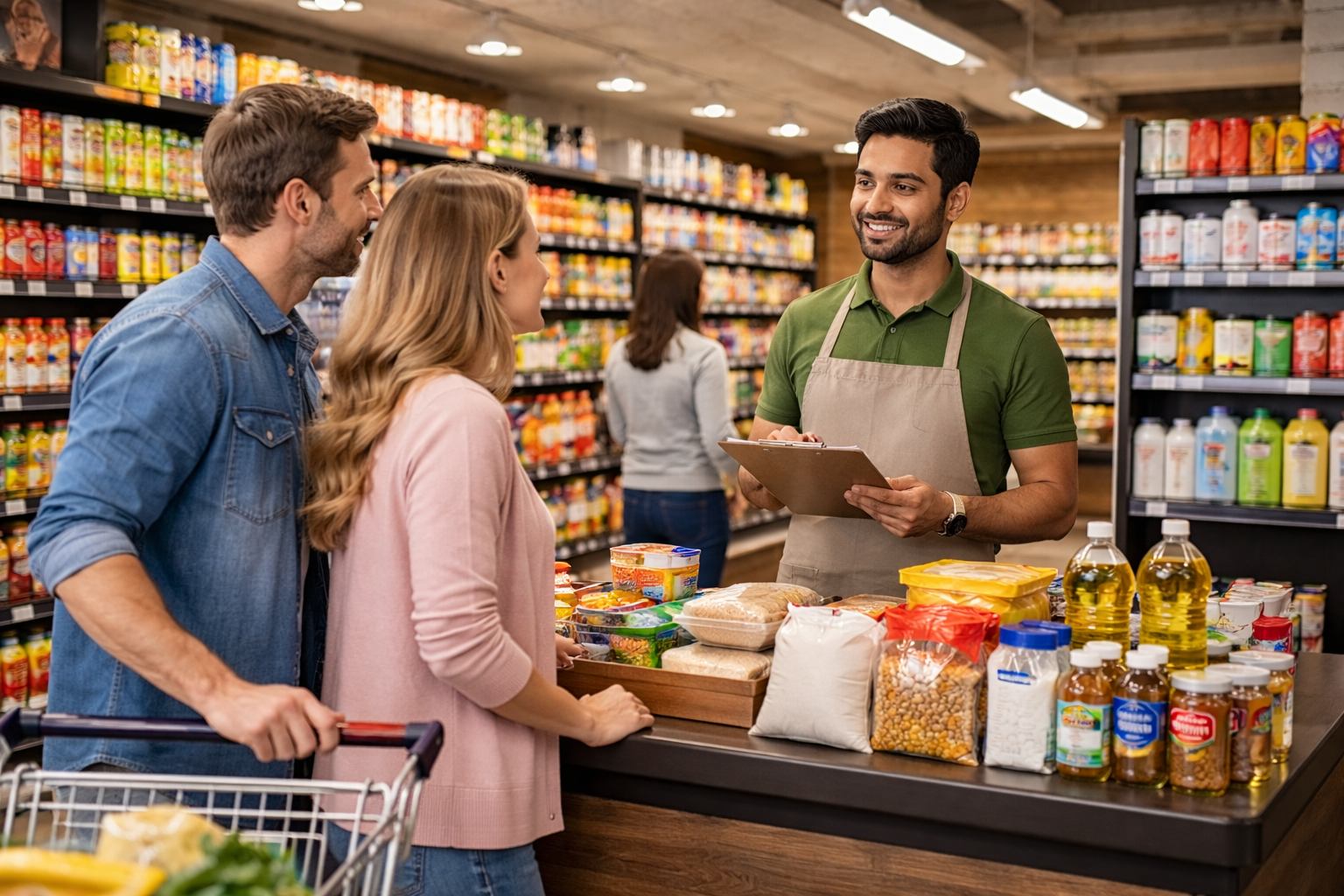
A grocery store is one of the few businesses that never run out of customers. People may delay buying clothes or gadgets, but the need for food and daily essentials stays constant across seasons and economic cycles. That reliability is exactly why many first time business owners look at grocery retail seriously.
At the same time, you may have noticed how some grocery stores stay busy while others quietly shut down within a year. The difference is rarely luck. It usually comes down to planning, location choices, and day to day discipline.
This guide walks you through the exact steps needed to open a grocery store the right way. By the end, you will clearly understand setup costs, shop size, product selection, legal requirements, profit margins, staffing needs, and whether a franchise model makes sense for you.
Step 1: Understand How the Grocery Store Business Actually Works
Before spending money on rent or stock, you need to understand the economics of a grocery store. This business runs very differently from many other retail models and assumptions often lead beginners into trouble.
Grocery stores depend on repeat customers, fast moving inventory, and tight control over expenses. Profit comes from consistency, not big one time sales.
High frequency buying behavior
Customers visit grocery stores multiple times a week for essentials. This means availability and convenience matter more than fancy displays or deep discounts.
- Missing regular items like milk, rice, or oil quickly pushes customers to nearby alternatives
- Daily footfall builds only when customers trust your stock reliability
Low margins balanced by volume
Average profit margins in grocery retail usually range between 8 percent and 18 percent depending on product mix. Packaged foods give lower margins while snacks and personal care offer slightly higher returns.
- Profit depends on selling more units consistently
- Wastage and expiry directly reduce monthly income
Local trust over brand image
Unlike malls or online platforms, grocery stores grow through familiarity. Customers prefer stores where they feel recognized and comfortable.
- Owner presence increases loyalty in early stages
- Credit and small conveniences matter in local markets
Step 2: Decide the Store Type and Scale You Can Manage
Choosing the right store format decides how much money you invest and how complex your operations become. Many beginners fail by copying large stores without matching resources.
Your goal should be a format that fits your location, budget, and ability to manage daily operations.
Small neighborhood grocery store
This is the most common and beginner friendly model. It focuses on daily essentials and quick purchases.
- Recommended shop size is around 150 to 300 square feet
- Lower investment and easier inventory control
- Works best in residential areas
Medium size general grocery store
This format allows wider product variety and slightly higher billing per customer.
- Ideal shop size is around 400 to 800 square feet
- Requires better shelving and storage planning
- Needs one or two staff members
Specialty focused grocery store
Some stores focus on organic products, imported goods, or premium categories. This works only if local demand exists.
- Margins can be higher but sales volume is lower
- Risk increases if demand is misjudged
- Customer education becomes important
Step 3: Select a Location That Supports Daily Footfall
Location can make or break a grocery store. Even experienced operators struggle if foot traffic is weak or inconvenient.
Avoid choosing a location only because rent is cheap. Long term sustainability matters more than short term savings.
Residential density and walking access
Grocery stores perform best where people can walk in easily. Daily purchases are rarely planned far in advance.
- Areas with apartments, housing colonies, or hostels work well
- Ground floor shops attract more regular customers
Visibility and entry convenience
Customers should spot your store without effort. Hidden entrances reduce impulse visits.
- Clear signage improves first time discovery
- Avoid locations with blocked or narrow access
Rent stability and lease clarity
Sudden rent increases can destroy profits. Always think beyond the first year.
- Prefer longer lease agreements where possible
- Confirm the shop has commercial usage permission
Step 4: Complete Legal, License, and Tax Formalities
A grocery store is a physical business dealing with food and public sales. Legal compliance is mandatory and cannot be skipped.
Requirements vary by country, state, and city, so always verify current local rules before opening.
Local trade license and municipal approval
Most local authorities require a trade license to operate a retail shop. Municipal bodies may inspect safety and cleanliness.
- Apply before opening to avoid penalties
- Display license copies at the store
Food safety registration or license
Selling packaged food usually requires food safety registration. The level depends on store size and turnover.
- Basic registration suits small stores
- Clean storage reduces inspection issues
Step 5: Plan Your Product Mix and Supplier Network
Your products and suppliers decide both customer satisfaction and profitability. Poor supplier planning often causes stock shortages or pricing problems.
Start simple and expand based on actual demand.
Essential starter product categories
Every grocery store must cover daily essentials first before adding optional items.
- Rice, wheat flour, pulses, oil, sugar, salt
- Packaged snacks, biscuits, beverages
- Basic personal care and cleaning items
Choosing between wholesalers and distributors
Wholesalers offer better prices but higher minimum orders. Distributors offer convenience and smaller quantities.
- Use distributors for fast moving essentials
- Use wholesalers for bulk staples to improve margins
Managing expiry and slow movers
Expiry losses silently reduce profits if not tracked.
- Start with limited quantities of new items
- Monitor slow selling products weekly
Step 6: Set Up Store Operations and Staffing
A grocery store runs on routine. Clear systems reduce stress and prevent daily losses.
Operations should be simple enough to handle even during busy hours.
Billing and inventory system
Manual billing often leads to mistakes and leakage. A basic digital system improves control.
- Faster checkout improves customer experience
- Stock alerts prevent sudden shortages
Staff requirement and roles
Very small stores can start owner operated, but staff becomes necessary as sales grow.
- One helper can manage restocking and cleaning
- Cash handling responsibility should be limited
Daily discipline and control checks
Small daily checks prevent big monthly problems.
- Daily cash tally avoids confusion
- Regular shelf cleaning maintains hygiene
Step 7: Explore the Franchise Option If You Prefer Structure
Grocery retail does offer franchise models in many regions, especially for convenience store chains. This option suits those who want structured systems rather than building everything from scratch.
Franchises reduce trial and error but limit flexibility.
How grocery franchises usually operate
Franchise grocery stores follow standard layouts, product lists, and operating rules defined by the franchisor.
- Centralized purchasing may be mandatory
- Branding and pricing guidelines must be followed
Franchisor support versus your responsibility
Understanding this split avoids future disappointment.
- Franchisor may provide training and setup guidance
- Inventory investment and staffing are usually yours
Step by step franchise startup process
Starting through a franchise follows a clear sequence.
- Submit inquiry and business details
- Review investment costs and territory terms
- Sign franchise agreement after legal review
- Complete store setup and training
- Launch store under brand guidelines
Step 8: Launch the Store and Stabilize the First Few Months
The opening phase shapes customer perception. A smooth start builds trust faster than aggressive promotions.
Focus on stability before expansion.
Soft opening and demand observation
Opening quietly allows learning without pressure.
- Identify fast moving and slow items
- Adjust pricing and stock levels gradually
Local promotion that actually works
Grocery stores grow through familiarity, not large advertising budgets.
- Simple opening offers attract first time buyers
- Friendly service converts them into regulars
Tracking profits and reinvestment
Early profits should strengthen the store, not be withdrawn too quickly.
- Maintain a cash buffer for emergencies
- Reinvest in better shelves and product variety
Frequently Asked Questions
How much investment is needed to open a grocery store
A small grocery store usually requires moderate capital covering rent deposit, inventory, licenses, and basic fixtures. Starting small reduces risk.
Is staff mandatory for a grocery store
Very small stores can start owner operated, but at least one helper is recommended as customer volume increases.
Is grocery store business profitable for beginners
Yes, if managed with discipline. Profitability depends on location, inventory control, and regular customers rather than high margins.
What is the average profit margin in grocery business
Average margins range from 8 percent to 18 percent depending on product mix, wastage control, and sales volume.
Is franchise better than independent grocery store
Franchise offers systems and brand support, while independent stores offer flexibility. The right choice depends on your experience and goals.
How long does it take to break even
Most grocery stores take 8 to 18 months to stabilize depending on location, rent, and operating discipline.
Final Thoughts
Opening a grocery store is less about big ideas and more about steady execution. When you focus on location, stock discipline, customer trust, and daily routines, the business becomes predictable and rewarding. Mistakes will happen, but early learning keeps them manageable. With patience and consistency, a grocery store can become a strong long term source of income.
Receive our latest articles and resources directly in your inbox